

First View- Split Pane Search and Synthesis
OWEN has two panes, either of which can be collapsed or expanded so you are only working in one.
The left hand pane is the study search pane, and the right is the AI pane.

Search only view

AI View – OWEN or Synthesis Suite
OWEN – Chat based
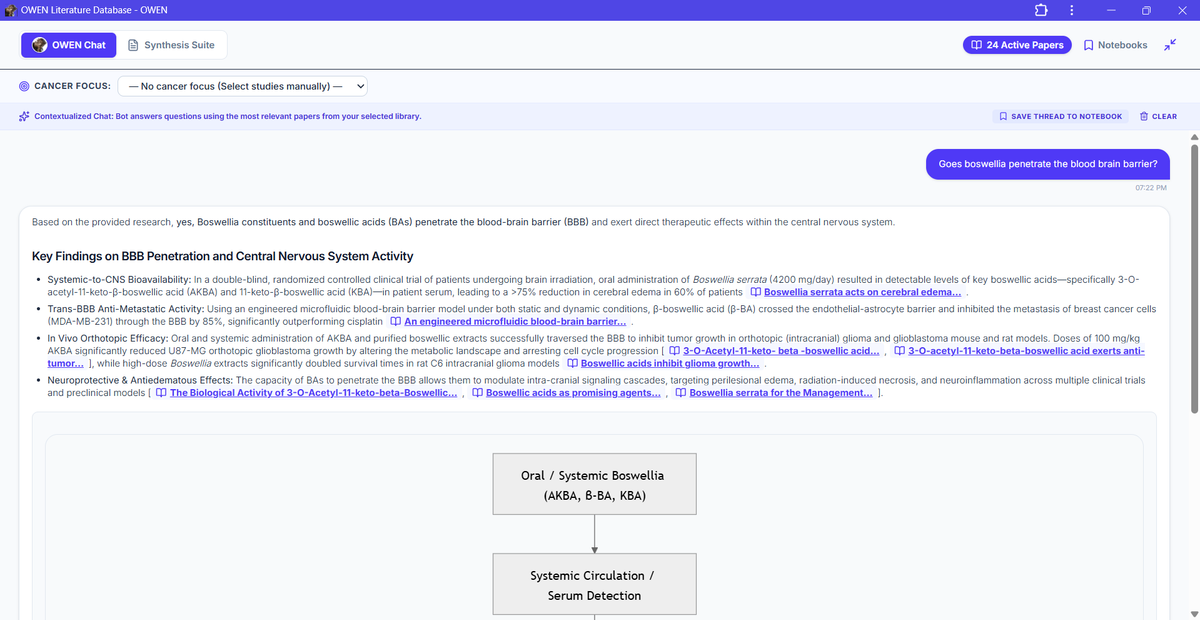
Synthesis Suite

Search
Choose Keyword, Semantic or Hybrid search.

Add a simple or complex Boolean search
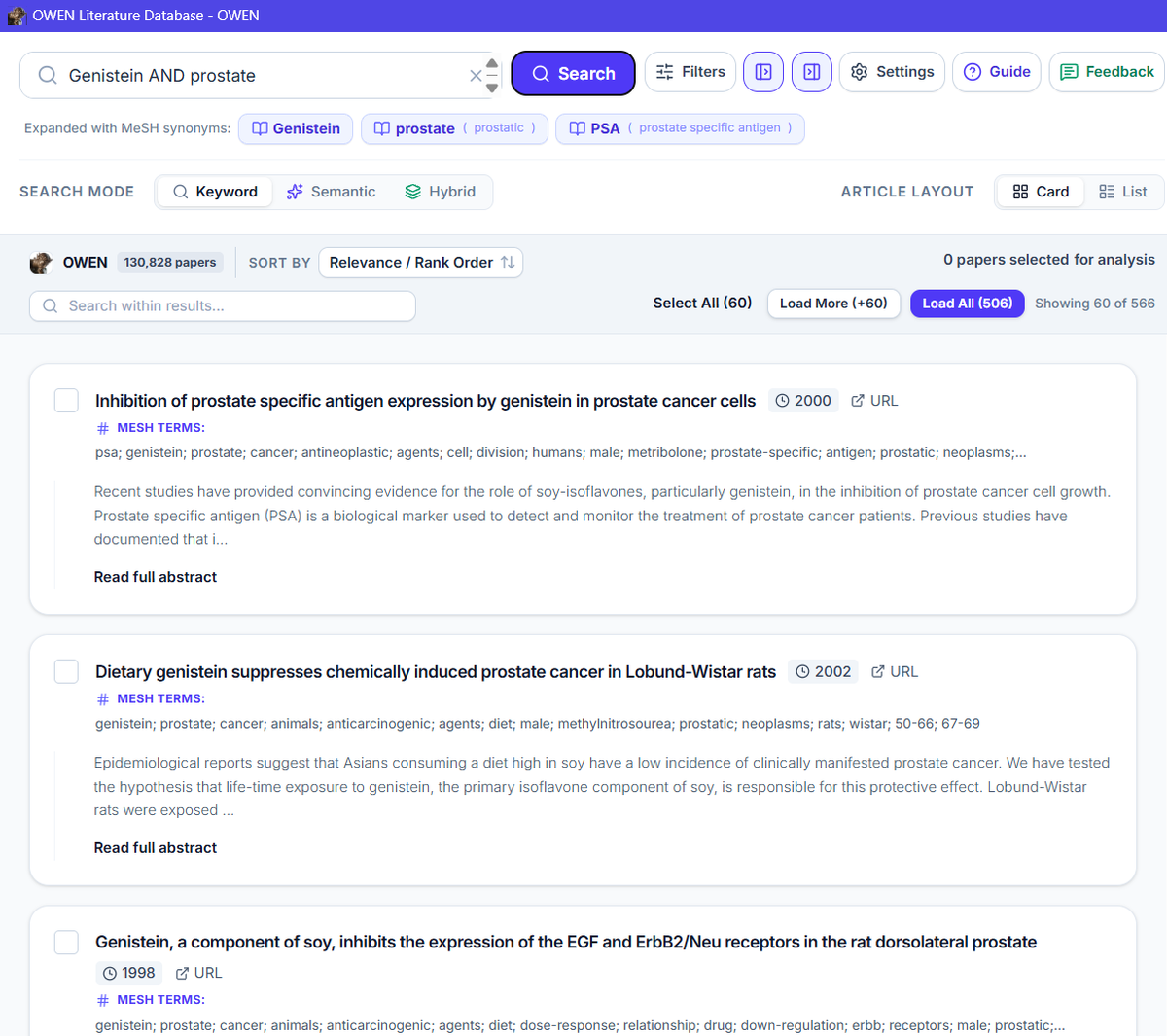
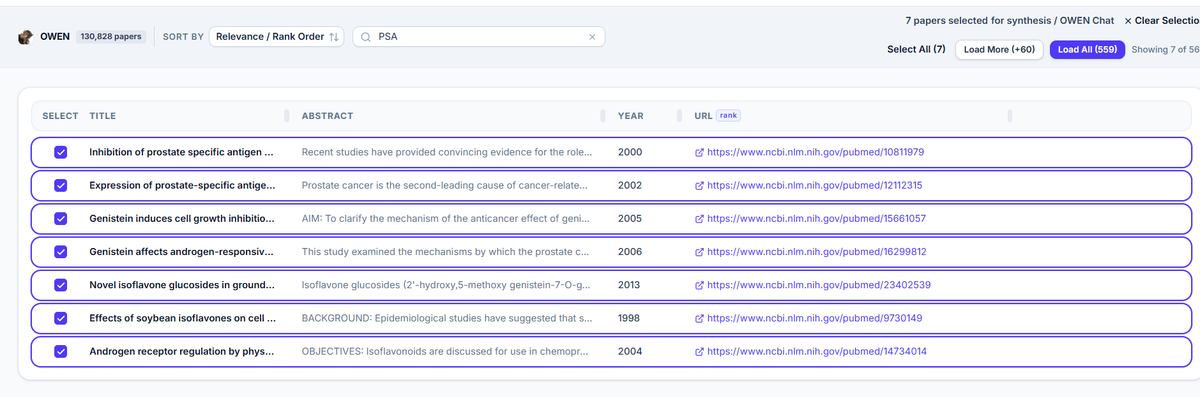
Read the detail of any and all studies, linked to the PubMed source.
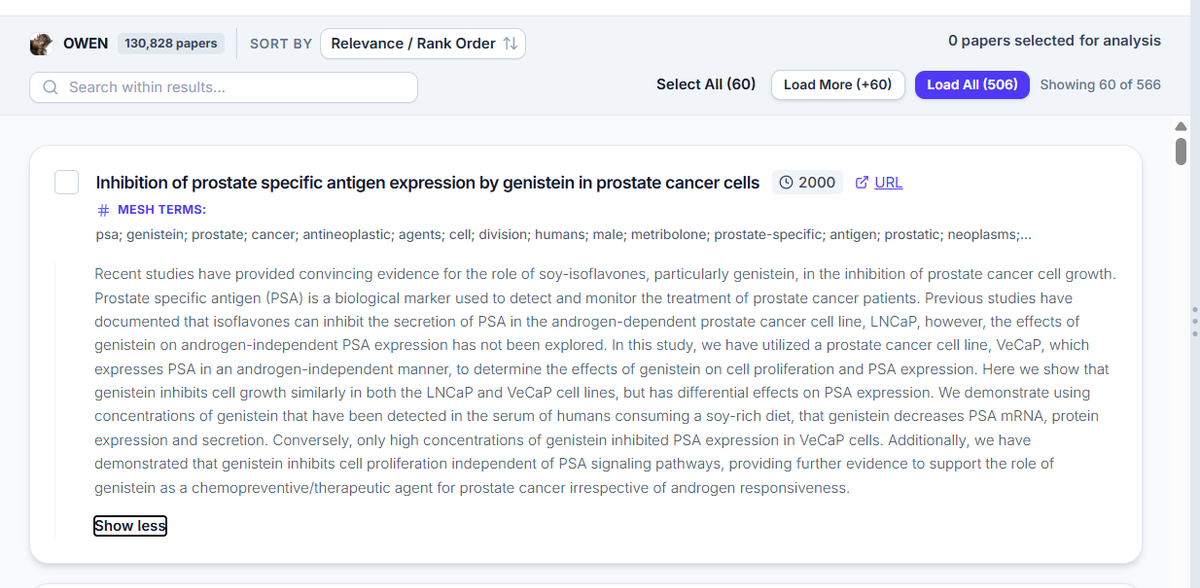
Filter within the list for further specificity.
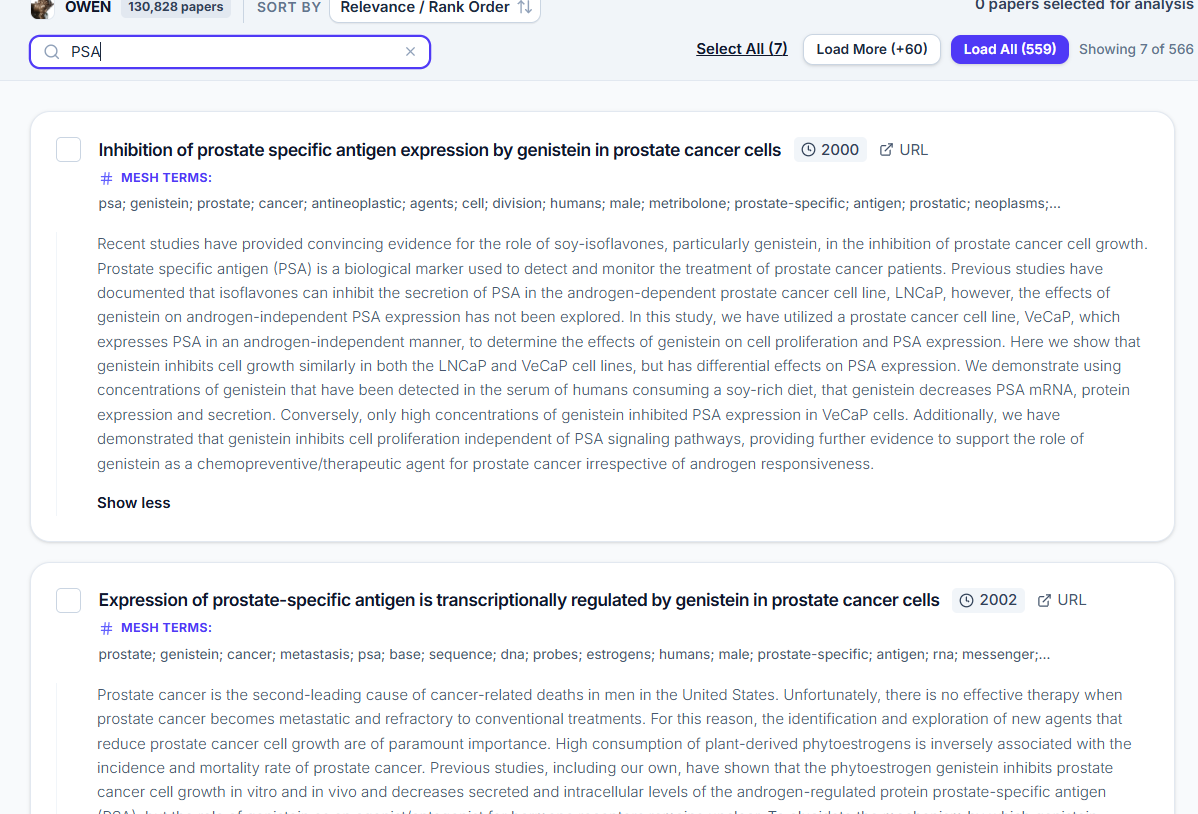
Select any or all studies in the list for AI exploration.
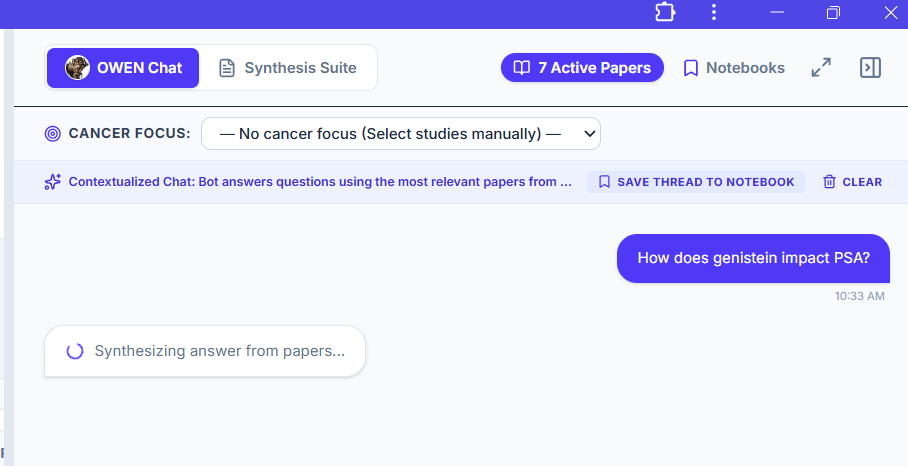
Ask OWEN a question based on the selected papers
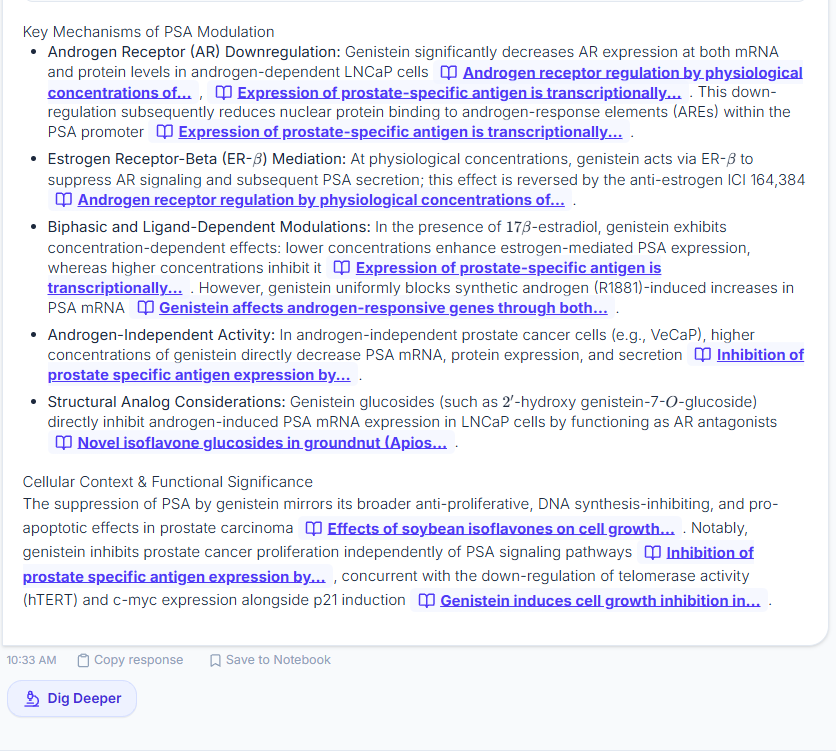
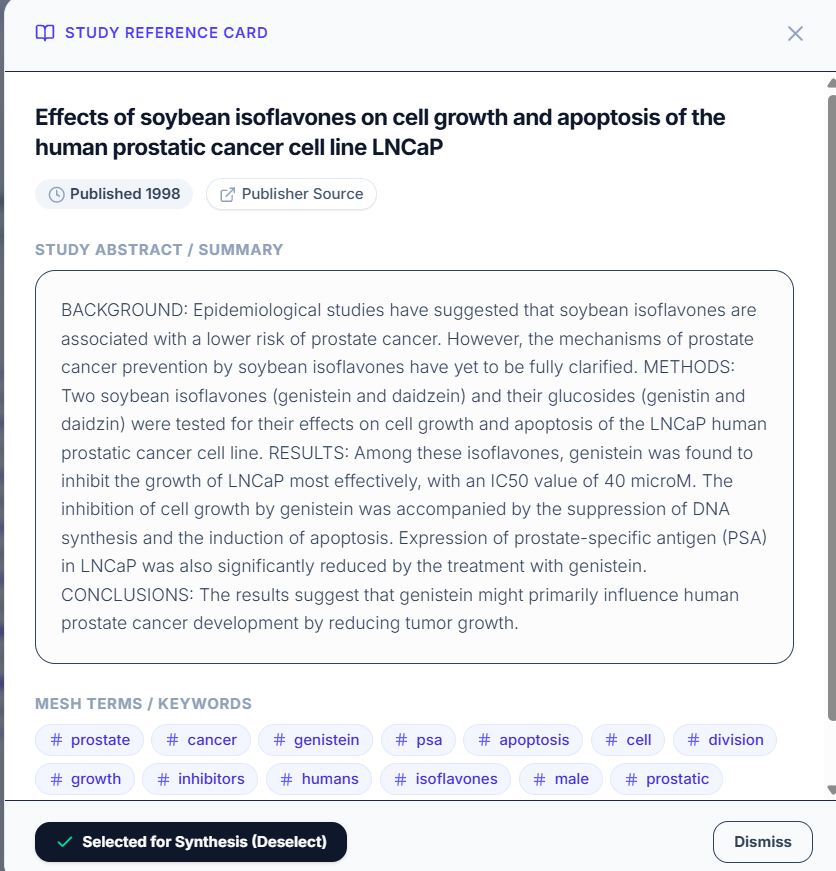
Click the hyperlinked paper to bring up the study reference card with a link to the PubMed source.
Synthesis Suite
Choose one of the prebuilt templates with space for custom instructions to further focus the response.

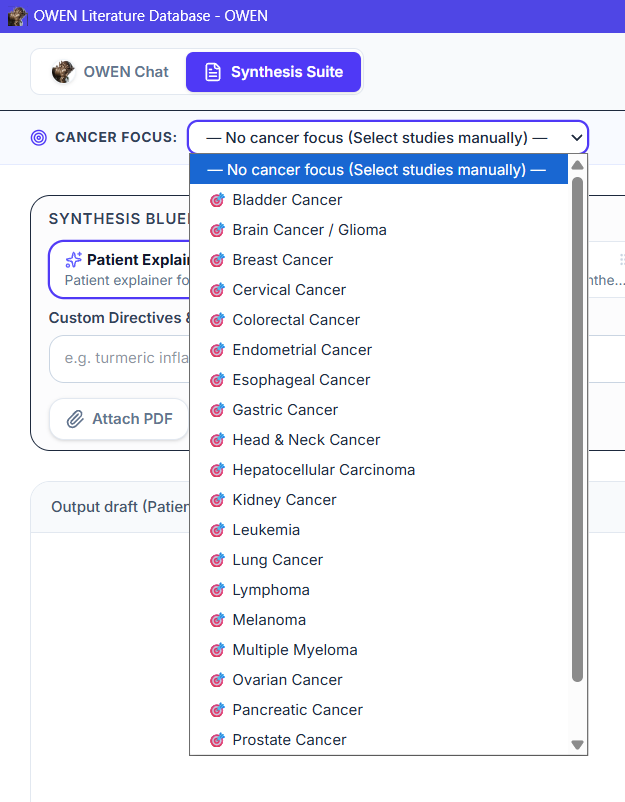
Cancer Focus Selector –
Choose a cancer focus, which automatically selects all of the papers in the corpus for AI discussion. This works in both OWEN and Synthesis Suite.

Notebook
Queries are saved and can be organized in folders so you don’t have to run the same search over again, and can create and save standard patient explainers etc.

Example Queries & Responses
These are exports of example queries and responses. The actual formatting within OWEN looks like this:
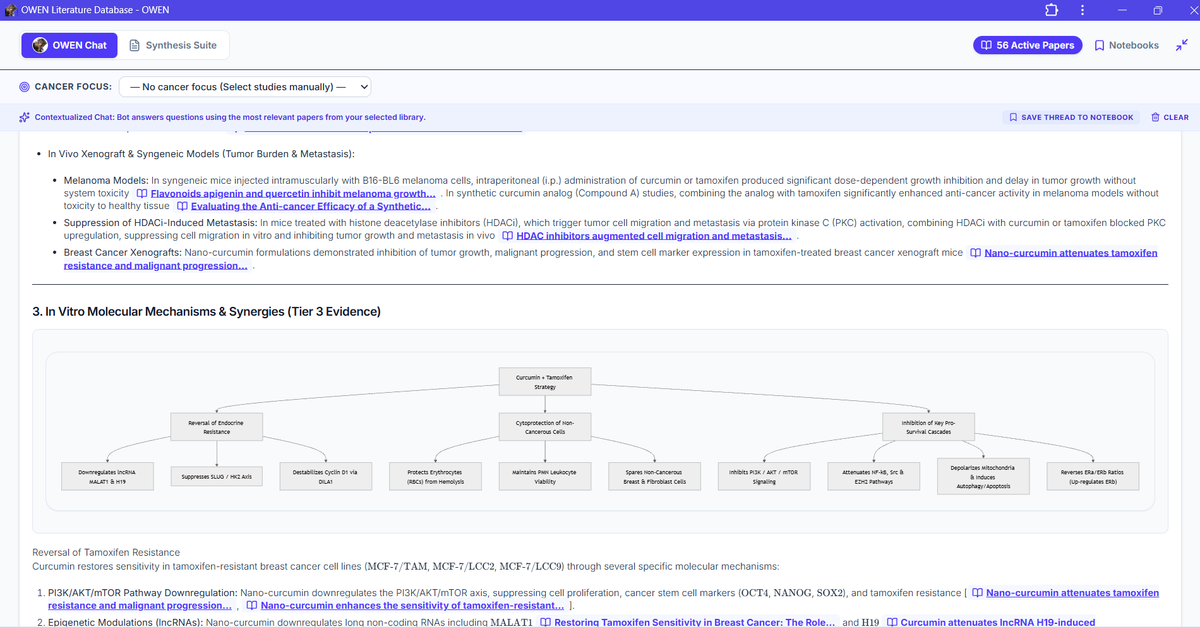
Can curcumin be used safely with Tamoxifen?
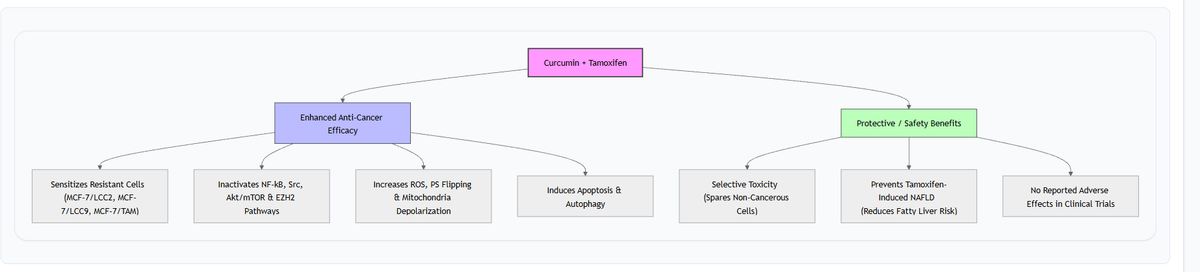
Based on the provided research, curcumin can be used safely and synergistically alongside tamoxifen (Nolvadex), offering both enhanced therapeutic efficacy and protective benefits against treatment-associated side effects.
Safety and Tolerability
*
Clinical Safety and Hepatoprotection: A 6-month triple-blind, randomized placebo-controlled trial in estrogen receptor-positive (ER+) breast cancer patients demonstrated that daily supplementation with 500 mg of curcumin is safe, well-tolerated, and produces no reported adverse effects. Furthermore, curcumin significantly reduced the incidence and severity of tamoxifen-induced nonalcoholic fatty liver disease (NAFLD), with significantly fewer patients experiencing an increased NAFLD grade compared to placebo (13.6% vs. 54.5%) Curcumin Supplementation as a Preventive Strategy….
*
Selective Cytotoxicity: In preclinical models evaluating combination therapy, curcumin and tamoxifen co-treatment demonstrated selective toxicity toward malignant cells while leaving non-cancerous cells unaffected Chemo-resistant melanoma sensitized by tamoxifen to…. Synthetic analogs of curcumin combined with tamoxifen similarly produced no significant toxicity to normal cells Evaluating the Anti-cancer Efficacy of a….
Reversal of Drug Resistance & Efficacy Synergies
*
Reversal of Endocrine Resistance: Curcumin restores sensitivity to tamoxifen in antiestrogen-resistant breast cancer cell lines (MCF-7/LCC2, MCF-7/LCC9, and MCF-7/TAM) by downregulating PLAC8/MAPK signaling, inactivating the NF-kappaB, Src, and Akt/mTOR pathways, and downregulating the epigenetic modifier EZH2 Curcumin induces cell death and restores…, Regulation of tamoxifen sensitivity by the….
*
Synergistic Pro-Apoptotic Effects: The combination of low-dose curcumin and tamoxifen synergistically inhibits cancer cell survival and triggers both apoptosis and autophagy by enhancing reactive oxygen species (ROS) generation, phosphatidylserine flipping, and mitochondrial membrane depolarization in chemo-resistant melanoma cells Chemo-resistant melanoma sensitized by tamoxifen to….
USE THE DIG DEEPER BUTTON TO AUTOMATICALLY PROMPT AND EXPAND THE RESPONSE:


Clinical Analysis: Co-Administration of Curcumin and Tamoxifen
1. Human Clinical Trials (Tier 1 Evidence)
Prophylactic Efficacy Against Tamoxifen-Induced NAFLD:
Clinical Trial Design: A 6-month, triple-blind, randomized, placebo-controlled trial evaluated 44 estrogen receptor-positive (ER^+) breast cancer patients initiating tamoxifen therapy. Patients were assigned to receive either 500 mg/day of oral curcumin (n=22) or a placebo (n=22) Curcumin Supplementation as a Preventive Strategy….
*
Outcomes: Patients receiving 500 mg/day of curcumin experienced a statistically significant reduction in the development and progression of non-alcoholic fatty liver disease (NAFLD). At study completion, significantly fewer patients in the curcumin cohort showed an increased NAFLD grade compared to placebo (13.6% vs. 54.5%; p = 0.03). The prevalence of moderate-to-severe NAFLD (grade ≥ 2) was also lower in the curcumin group (13.6% vs. 40.9%; p = 0.04) with no reported adverse events Curcumin Supplementation as a Preventive Strategy….
*
Clinical Pharmacokinetics & Endoxifen Exposure:
*
Clinical Trial Design: A pharmacokinetic study in breast cancer patients assessed the impact of oral curcumin (1200 mg three times daily [t.i.d.]) with or without piperine (10 mg t.i.d.) on tamoxifen (20–30 mg/day) and its active metabolite, endoxifen Impact of Curcumin (with or without….
*
Outcomes & Pharmacokinetic Risk: Concomitant administration of 1200 mg t.i.d. curcumin decreased endoxifen area under the concentration-time curve (AUC0–24h) by 7.7% (p = 0.07). When combined with piperine, endoxifen AUC0–24h decreased significantly by 12.4% (p = 0.02), particularly in patients with a CYP2D6 extensive metabolizer phenotype Impact of Curcumin (with or without….
*
Clinical Relevance: High oral doses of curcumin (especially when combined with bio-enhancers like piperine) may reduce plasma concentrations of the active metabolite endoxifen below the therapeutic efficacy threshold in 20–40% of patients Impact of Curcumin (with or without….
—
###
2. In Vivo Animal Models (Tier 2 Evidence)
Rat Pharmacokinetics & Bioavailability Mechanisms:
*
Dosing & Administration: Oral tamoxifen (9 mg/kg) was administered to rats with or without oral curcumin at 0.5 mg/kg, 2.5 mg/kg, and 10 mg/kg, or intravenous tamoxifen (2 mg/kg) with or without curcumin (2.5 mg/kg and 10 mg/kg) Effects of curcumin on the pharmacokinetics….
*
Outcomes: Curcumin at 2.5 mg/kg and 10 mg/kg significantly increased tamoxifen AUC0–∞ by 33.1–64.0% (p < 0.05 and p < 0.01, respectively) and peak concentration (Cmax) by 38.9–70.6% Effects of curcumin on the pharmacokinetics…. Absolute oral bioavailability of tamoxifen increased from 20.4% (control) to 27.2–33.5% Effects of curcumin on the pharmacokinetics….
*
Mechanism: Curcumin inhibited intestinal and hepatic CYP3A4 activity (IC50 = 2.7\ μM) and P-glycoprotein (P-gp) efflux pumps, thereby decreasing first-pass metabolism and increasing parent drug bioavailability, while significantly reducing the metabolite-to-parent AUC ratio (MR) Effects of curcumin on the pharmacokinetics….
- In Vivo Xenograft & Syngeneic Models (Tumor Burden & Metastasis):
*
Melanoma Models: In syngeneic mice injected intramuscularly with B16-BL6 melanoma cells, intraperitoneal (i.p.) administration of curcumin or tamoxifen produced significant dose-dependent growth inhibition and delay in tumor growth without system toxicity Flavonoids apigenin and quercetin inhibit melanoma…. In synthetic curcumin analog (Compound A) studies, combining the analog with tamoxifen significantly enhanced anti-cancer activity in melanoma models without toxicity to healthy tissue Evaluating the Anti-cancer Efficacy of a….
*
Suppression of HDACi-Induced Metastasis: In mice treated with histone deacetylase inhibitors (HDACi), which trigger tumor cell migration and metastasis via protein kinase C (PKC) activation, combining HDACi with curcumin or tamoxifen blocked PKC upregulation, suppressing cell migration in vitro and inhibiting tumor growth and metastasis in vivo HDAC inhibitors augmented cell migration and….
*
Breast Cancer Xenografts: Nano-curcumin formulations demonstrated inhibition of tumor growth, malignant progression, and stem cell marker expression in tamoxifen-treated breast cancer xenograft mice Nano-curcumin attenuates tamoxifen resistance and malignant….
—
###
3. In Vitro Molecular Mechanisms & Synergies (Tier 3 Evidence)

Reversal of Tamoxifen Resistance
Curcumin restores sensitivity in tamoxifen-resistant breast cancer cell lines (MCF-7/TAM, MCF-7/LCC2, MCF-7/LCC9) through several specific molecular mechanisms:
1.PI3K/AKT/mTOR Pathway Downregulation: Nano-curcumin downregulates the PI3K/AKT/mTOR axis, suppressing cell proliferation, cancer stem cell markers (OCT4, NANOG, SOX2), and tamoxifen resistance Nano-curcumin attenuates tamoxifen resistance and malignant…, Nano-curcumin enhances the sensitivity of tamoxifen-resistant…].
2. Epigenetic Modulations (lncRNAs): Nano-curcumin downregulates long non-coding RNAs including MALAT1 Restoring Tamoxifen Sensitivity in Breast Cancer:… and H19 Curcumin attenuates lncRNA H19‑induced epithelial‑mesenchymal transition…, suppressing epithelial-mesenchymal transition (EMT), Snail expression, and cell invasion Curcumin attenuates lncRNA H19‑induced epithelial‑mesenchymal transition….
3. Cyclin D1-DILA1 Axis Modulation: Nano-curcumin decreases DILA1 expression, destabilizing Cyclin D1 protein and driving cell cycle arrest at the G2/M phase Curcumin induces cell death and restores…, Nano-curcumin enhances the sensitivity of tamoxifen-resistant…].
4. SLUG/Hexokinase 2 (HK2) Pathway: Curcumin blocks 4-hydroxytamoxifen-induced upregulation of SLUG, suppressing HK2 expression and mitochondrion-mediated apoptosis resistance in triple-negative breast cancer (TNBC) cells Curcumin suppresses 4-hydroxytamoxifen resistance in breast….
5. Multitarget Signal Inactivation: Curcumin inactivates NF-\kappaB, Src, Akt, and the epigenetic modifier EZH2, upregulating BAX and p53 while downregulating BCL2 Basal levels and patterns of anticancer…, Curcumin induces cell death and restores…, Apoptosis Induction, Cell Cycle Arrest and…].
ER Activation and Selectivity
- Curcumin selectively activates Estrogen Receptor beta (ERβ) over ERα, inducing a shift toward higher ERβ expression and nuclear periphery localization Modulators of estrogen receptor inhibit proliferation…, Nutraceuticals known to promote hair growth…].
- In prostate cancer cells (DU145, PC3), curcumin activates ERβ signaling, decreasing cell proliferation, migration, and attachment to laminin/fibronectin Modulators of estrogen receptor inhibit proliferation….
Differential Cytotoxicity & Safety Profile
*
Hematologic Protection: In human red blood cells (RBCs) and polymorphonuclear leukocytes (PMNs), curcumin decreases tamoxifen-induced hemolysis (K^+ and hemoglobin release) and enhances leukocyte viability Effect of the o-methyl catechols apocynin,….
*
Non-Cancerous Cell Sparing: Nanoparticle and niosomal co-formulations containing tamoxifen and curcumin display enhanced cytotoxicity against breast cancer lines (MCF-7, MDA-MB-231) while demonstrating minimal cytotoxicity toward healthy cells, such as PBMCs and fibroblasts Chemo-resistant melanoma sensitized by tamoxifen to…, Nano Packaged Tamoxifen and Curcumin; Effective…, Apoptosis Induction, Cell Cycle Arrest and…].
—
###
4. Pharmacokinetic Limitations & Delivery Systems
| Bioavailability Barrier | Advanced Delivery Formulations Investigated | Reported Therapeutic Improvement |
| High Hydrophobicity & Poor Aqueous Solubility | PEG-PCL Nanofibers / Polymeric Nanoparticles | Sustained drug release profile; enhanced cell viability reduction in MCF-7 cells Uniaxial and Coaxial Nanofibers PCL/Alginate or…, Curcumin for Treating Breast Cancer: A…]. |
| Rapid Intestinal & Hepatic Metabolism | Cyclodextrin Nanosponges (NS) | Higher drug solubilization, enhanced membrane permeability, and sustained systemic circulation Cyclodextrin-based nanosponges: a versatile platform for…. |
| P-gp Efflux & Rapid Elimination | pH-Responsive Gemini Surfactant Nanoparticles | High entrapment efficiency (>90%), targeted release in acidic tumor microenvironments (pH 5.5), synergistic combination index (CI = 0.353–0.561) Synergistic effect of curcumin and tamoxifen…. |
| Limited Intracellular Uptake | Porous PLA-PEG-Cholesterol Microparticles / ZnO NPs | Promotes cellular endocytosis and intracellular drug delivery; achieves high selectivity index (>4.60) without DNA genotoxicity Comprehensive Analysis of Curcumin Zinc Oxide…, Cholesterol-Functionalized Porous PLA Microparticles for Enhanced…]. |
| Formulation Degradation | Niosomes (Span 80 / Lipid Carriers) | Synergistic upregulation of BAX/p53 and enhanced apoptosis rate in acidic tumor environments relative to free drugs Apoptosis Induction, Cell Cycle Arrest and…. |
—
###
5. Clinical Synthesis & Therapeutic Recommendations
1.Hepatoprotection Strategy: Moderate-dose oral curcumin (500 mg/day) can be safely co-administered with tamoxifen to prevent tamoxifen-induced NAFLD in ER^+ breast cancer patients Curcumin Supplementation as a Preventive Strategy….
2.Dose and Drug Interaction Caution: High oral doses of curcumin (≥ 3600 mg/day), especially when formulated with bio-enhancers like piperine, should be monitored carefully. Curcumin’s inhibition of CYP3A4 and P-gp can lower active endoxifen levels while raising parent tamoxifen concentrations Effects of curcumin on the pharmacokinetics…, Impact of Curcumin (with or without…]. Patients who are extensive CYP2D6 metabolizers are at particular risk for reduced endoxifen exposure Impact of Curcumin (with or without….
3.Adjuvant Antineoplastic Potential: Preclinical evidence strongly supports using bioavailable nano-curcumin formulations alongside tamoxifen to bypass drug resistance, block EMT pathways, downregulate the PI3K/AKT/mTOR axis, and reduce systemic toxicity Curcumin attenuates lncRNA H19‑induced epithelial‑mesenchymal transition…, Nano-curcumin attenuates tamoxifen resistance and malignant…, Nano-curcumin enhances the sensitivity of tamoxifen-resistant…].
A patient undergoing chemotherapy is experiencing peripheral neuropathy. I am giving them:
Alpha lipoic acid, Vitamin E, Glutamine
What else can I offer them?
Protocol Identification
- Target Condition: Chemotherapy-Induced Peripheral Neuropathy (CIPN) occurring in a patient currently undergoing chemotherapy.
- Interventions Evaluated in Protocol:
- Alpha-lipoic acid (ALA)
- Vitamin E
- Glutamine
- Stated Doses / Timing / Population: Specific dosages and schedules were not provided in the prompt. The target population comprises adult cancer patients undergoing neurotoxic chemotherapy (e.g., platinum compounds, taxanes, bortezomib).
—
Evidence Assessment — What’s In The Protocol
Alpha-Lipoic Acid (ALA)
- Evidence Signal: Weak / Conflicting
- Key finding: Systematic reviews and randomized controlled trials indicate that oral alpha-lipoic acid is ineffective for preventing or reducing chemotherapy-induced peripheral neuropathy symptoms, despite showing efficacy in diabetic peripheral neuropathy (The role of diet and non-pharmacologic…, PMID: 37654090) (Oral alpha-lipoic acid to prevent…, PMID: 24362907).
- Concern or caveat: Clinical trials demonstrated high attrition rates, dosage infeasibility, and lack of benefit over placebo in platinum-based regimens (Oral alpha-lipoic acid to prevent…, PMID: 24362907), though preclinical models suggest potential neuroprotection via IL-17 pathway inhibition (Alpha-lipoic acid ameliorates nab-paclitaxel-induced peripheral…, PMID: 41394816) and preliminary non-randomized data combined with DHA showed potential benefit in bortezomib-treated myeloma patients (Prevention of Bortezomib-Related Peripheral Neuropathy…, PMID: 30295079).
Vitamin E
- Evidence Signal: Weak / Conflicting
- Key finding: Meta-analyses demonstrate that overall vitamin E supplementation does not significantly reduce the overall incidence or severity of CIPN (Vitamin E does not decrease the…, PMID: 27647988), although subgroup analyses show potential protective effects specific to cisplatin-induced neurotoxicity (Interventions for preventing neuropathy caused by…, PMID: 24687190) (Vitamin E does not decrease the…, PMID: 27647988).
- Concern or caveat: Major clinical practice guidelines reconfirmed that no agents, including Vitamin E, are recommended for CIPN prevention, and objective quantitative nerve conduction studies have failed to confirm positive subjective findings (Interventions for preventing neuropathy caused by…, PMID: 24687190) (Prevention and Management of Chemotherapy-Induced…, PMID: 32663120).
Glutamine
- Evidence Signal: Moderate (Preliminary / Mixed)
- Key finding: L-Glutamine shows promising preliminary evidence in reducing the incidence and severity of paclitaxel- and platinum-induced peripheral sensory neuropathy (Natural products and complementary therapies for…, PMID: 26652982) (Advising patients on the use of…, PMID: 23707384).
- Concern or caveat: Clinical trials display conflicting results overall, and available studies in advanced cancer carry a high or unclear risk of bias with very low GRADE certainty (The role of diet and non-pharmacologic…, PMID: 37654090) (Non-Pharmacological Self-Management Strategies for…, PMID: 35745132).
—
Top Evidence Gaps — What’s Missing
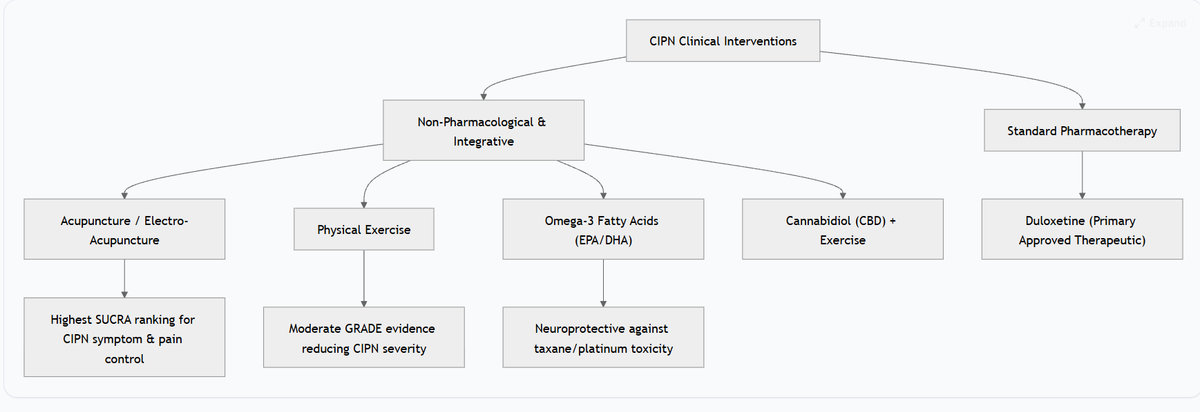
Acupuncture and Electro-Acupuncture
- Why it’s relevant: Acupuncture-related interventions modulate neural signaling and peripheral circulation, presenting a non-pharmacological approach to alleviating sensory neuropathic pain and functional impairment.
- Evidence level: Strong (Acupuncture-related interventions improve chemotherapy-induced peripheral…, PMID: 39160496).
- Clinical consideration: Network meta-analysis reveals that acupuncture plus electrical stimulation (acupuncture-E) ranks highest (SUCRA) in overall improvement of CIPN symptoms, while acupuncture alone is most effective for reducing neuropathic pain (Acupuncture-related interventions improve chemotherapy-induced peripheral…, PMID: 39160496).
Physical Exercise
- Why it’s relevant: Exercise promotes neurogenesis, reduces systemic inflammation, and maintains peripheral nerve function and muscle strength during chemotherapy.
- Evidence level: Moderate (Non-Pharmacological Self-Management Strategies for…, PMID: 35745132).
- Clinical consideration: Meta-analysis demonstrates that physical exercise provides the strongest evidence among non-pharmacological interventions for significantly decreasing CIPN severity (SMD: -0.89) and improving physical function (Non-Pharmacological Self-Management Strategies for…, PMID: 35745132).
Duloxetine
- Why it’s relevant: As a serotonin-norepinephrine reuptake inhibitor (SNRI), duloxetine modulates descending pain pathways to alleviate established neuropathic pain.
- Evidence level: Strong (Prevention and Management of Chemotherapy-Induced…, PMID: 32663120).
- Clinical consideration: Duloxetine is the only pharmaceutical agent endorsed by ASCO clinical guidelines with appropriate evidence supporting its use for treating established, painful CIPN (Characterization of Internal Validity Threats to…, PMID: 31572750) (Prevention and Management of Chemotherapy-Induced…, PMID: 32663120).
Omega-3 Fatty Acids (DHA / EPA)
- Why it’s relevant: Long-chain omega-3 polyunsaturated fatty acids provide structural neuroprotection to neuronal membranes and reduce neuroinflammatory cascades.
- Evidence level: Moderate (Natural products and complementary therapies for…, PMID: 26652982) (New Insights into Potential Prevention and…, PMID: 27981142).
- Clinical consideration: Clinical studies demonstrate that omega-3 supplementation reduces the severity of paclitaxel-induced peripheral neuropathy and improves symptom scores when integrated into nutritional management (Non-Pharmacological Self-Management Strategies for…, PMID: 35745132) (New Insights into Potential Prevention and…, PMID: 27981142).
Cannabidiol (CBD) combined with Multi-Modal Exercise
- Why it’s relevant: CBD acts as an anti-inflammatory and neuroprotective agent that, when combined with multi-modal exercise, alters gut microbiota and reduces systemic inflammatory indices.
- Evidence level: Moderate (Emerging) (Impact of Cannabidiol and Exercise on…, PMID: 39065685).
- Clinical consideration: Preliminary evidence shows clinically meaningful improvements in long-standing CIPN symptoms, pain, mobility, and quality of life without the severe side effects associated with standard SNRIs (Impact of Cannabidiol and Exercise on…, PMID: 39065685).
—
Logical Conclusion
The current protocol—comprising oral alpha-lipoic acid, vitamin E, and L-glutamine—holds limited empirical support for the prevention or treatment of CIPN. Meta-analyses and major clinical guidelines (such as ASCO) demonstrate that oral alpha-lipoic acid and vitamin E are largely ineffective for general CIPN prevention, while L-glutamine displays only weak-to-moderate preliminary evidence (The role of diet and non-pharmacologic…, PMID: 37654090) (Prevention and Management of Chemotherapy-Induced…, PMID: 32663120). Crucially, clinicians should note that Acetyl-L-carnitine must be strictly avoided as evidence indicates it wanes or significantly worsens taxane-induced neuropathy (The role of diet and non-pharmacologic…, PMID: 37654090) (Acetyl-L-carnitine for the prevention of…, PMID: 36873277). The single most important gap to address in this protocol is the addition of non-pharmacological modalities—specifically electro-acupuncture and structured physical exercise—which possess the highest level of clinical evidence for reducing CIPN symptom severity and restoring functional capacity (Acupuncture-related interventions improve chemotherapy-induced peripheral…, PMID: 39160496) (Non-Pharmacological Self-Management Strategies for…, PMID: 35745132).
Genistein for Triple Negative Breast Cancer
Academic Literature Review: Mechanistic and Therapeutic Evaluation of Genistein in Triple-Negative Breast Cancer
Executive Summary
Triple-negative breast cancer (TNBC) represents an aggressive histological subtype of breast cancer characterized by the absence of estrogen receptor $\alpha$ ($ER\alpha$), progesterone receptor ($PR$), and human epidermal growth factor receptor 2 ($HER2$) gene amplification ([Wnt signaling blockage inhibits cell proliferation…](Understanding the Phytoestrogen Genistein Actions on Breast Cancer: Insights on Estrogen Receptor Equivalence, Pleiotropic Essence and Emerging Paradigms in Bioavailability Modulation, PMID: 36597609). Because of the absence of these traditional molecular targets, standard targeted endocrine and anti-$HER2$ therapies are ineffective, leaving systemically toxic chemotherapy as the clinical baseline ([The Potential of Natural Products in…](The anticancer mechanism of action of selected polyphenols in triple-negative breast cancer (TNBC), PMID: 37481930).
Genistein ($4′,5,7$-trihydroxyisoflavone), a naturally occurring soy-derived phytoestrogen, exhibits pleiotropic, anti-neoplastic properties across multiple preclinical models of TNBC ([Genistein inhibits MDA-MB-231 triple-negative breast…](PI3K/AKT/mTOR Pathway in Breast Cancer Pathogenesis and Therapy: Insights into Phytochemical-Based Therapeutics, PMID: 40549363). This systematic synthesis examines the cellular kinetics, signaling cascade modulations, epigenetic modifications, and combinatorial interactions of genistein in TNBC.

Direct Methodological & Quantitative Comparison of Included Studies
| Study ID | Model / System | Primary Interventions & Doses | Major Biological Outcomes | Key Molecular Markers / Pathways |
| (Genistein inhibits MDA-MB-231 triple-negative breast cancer cell growth by inhibiting NF-kappaB activity via the Notch-1 pathway, PMID: 22580499) | MDA-MB-231 cell line | Genistein ($0, 5, 10, 20\ \mu\text{M}$) | Dose/time-dependent growth inhibition; induction of apoptosis ($6.78\%$ to $60.64\%$); $G_2/M$ phase arrest ($4.93\%$ to $30.95\%$). | Notch-1, $NF\text{-}\kappa B$, Cyclin B1, Bcl-2, Bcl-xL. |
| (Wnt signaling blockage inhibits cell proliferation and migration, and induces apoptosis in triple-negative breast cancer cells, PMID: 24188694) | BT-549, MDA-MB-231, HCC-1143, HCC-1937, MCF-7 | Wnt inhibitors (iCRT-3), SOX4 shRNA, Genistein | Inhibition of proliferation/migration; synergistic induction of apoptosis when blocking Wnt/SOX4 signaling. | $\beta$-catenin, SOX4, Axin2, Wnt signaling cascade. |
| (Quantitative phosphoproteomics reveals genistein as a modulator of cell cycle and DNA damage response pathways in triple-negative breast cancer cells, PMID: 26783066) | MDA-MB-231 cell line | Genistein treatment (Phosphoproteomic TMT profiling) | Identified 332 regulated phosphorylation sites on 226 proteins; altered DNA replication, cohesin cleavage, kinetochore assembly. | ATR, BRCA1 complex, DNA damage response markers. |
| (Equol Enhances Apoptosis-inducing Activity of Genistein by Increasing Bax/Bcl-xL Expression Ratio in MCF-7 Human Breast Cancer Cells, PMID: 29095048) | MCF-7, SK-BR-3, MDA-MB-468 cell lines | Genistein single agent vs. Genistein + Equol ($50\ \mu\text{M}$) | Synergistic apoptosis in $ER^+$ MCF-7 cells; minimal cytotoxic enhancement in TNBC MDA-MB-468 cells. | Bax/Bcl-xL ratio, Akt, mTOR (independent of Akt/mTOR in MCF-7). |
| (Epigenetic Activation of BRCA1 by Genistein In Vivo and Triple Negative Breast Cancer Cells Linked to Antagonism toward Aryl Hydrocarbon Receptor, PMID: 31652854) | Mouse mammary tissue (in vivo); HCC38, MCF-7 cells | Dietary Genistein ($4, 10\text{ ppm}$ in vivo); in vitro doses | Decreased Brca1 CpG methylation; reversed AHR-mediated promoter occupancy; sensitized TNBC to tamoxifen. | AHR, BRCA1 exon 1a CpG methylation, $ER\alpha$. |
| (Estrogenic, Antiestrogenic and Antiproliferative Activities of Euphorbia bicolor (Euphorbiaceae) Latex Extracts and Its Phytochemicals, PMID: 31881661) | MCF-7, T47-D, MDA-MB-231, MDA-MB-468 | Euphorbia bicolor latex extract, Genistein, Coumestrol, RTX, Rutin | Antiproliferative activity across cell lines; biphasic response observed in MDA-MB-468 cells under latex treatment. | Estrogen Receptor $\alpha$ ($ER\alpha$), Cell viability metrics. |
| (Genistein Inhibits Proliferation of BRCA1 Mutated Breast Cancer Cells: The GPR30-Akt Axis as a Potential Target, PMID: 31950019) | BRCA1-mutated/silenced TNBC cell lines | Genistein treatment | Suppressed cell viability, migration, and colony formation; induced $G_2/M$ arrest; reduced intracellular ROS. | GPR30, Akt phosphorylation, Cyclin B1, Nrf2, ROS. |
| (Combination inhibition of triple-negative breast cancer cell growth with CD36 siRNA-loaded DNA nanoprism and genistein, PMID: 34153956) | TNBC cell lines | Genistein + CD36 siRNA-loaded DNA nanoprisms (NP-siCD36) | Downregulation of CD36; enhanced apoptotic rate; marked inhibition of cellular proliferation. | CD36, p38 MAPK phosphorylation. |
| (Therapeutic Effects of Dietary Soybean Genistein on Triple-Negative Breast Cancer via Regulation of Epigenetic Mechanisms, PMID: 34836197) | Preclinical PDX mouse models (BCM-3204, TM00091) | Dietary Genistein supplementation | Retardation of tumor growth in vivo; alteration of DNA/histone methylation levels and chromatin modifiers. | Cd74, $NF\text{-}\kappa B$/Bcl-xL/TAp63, DNMT3B, TET3, HDAC2, H3K9. |
| (The natural isoflavone Biochanin-A synergizes 5-fluorouracil anticancer activity in vitro and in vivo in Ehrlich solid-phase carcinoma model, PMID: 35112408) | MCF-7, MDA-MB-231; Ehrlich solid carcinoma model | Biochanin A + 5-Fluorouracil (5-FU) | Synergistic cytotoxic escalation in vitro; $75\%$ in vivo tumor reduction; $2.1$-fold increase in tumor necrosis area. | $ER\alpha$/Akt axis, apoptotic signaling indicators. |
| (Comparative EPR Studies on the Influence of Genistein on Free Radicals in Non-Irradiated and UV-Irradiated MCF7, T47D and MDA-MB-231 Breast Cancer Cells, PMID: 38540131) | MCF7, T47D, MDA-MB-231 cell lines | Genistein ($0.37, 3.7, 37, 370\ \mu\text{M}$) $\pm$ UV irradiation | Direct modulation of intracellular free radical concentration measured by electron paramagnetic resonance. | Free radicals / paramagnetic centers, UV stress response. |
| (Genistein and daidzein induce ferroptosis in MDA-MB-231 cells, PMID: 39245043) | MDA-MB-231, MCF-7 cell lines | Genistein, Daidzein $\pm$ Ferrostatin-1 | Induction of ferroptosis in TNBC MDA-MB-231 (reversed by ferrostatin-1); no ferroptosis induction in $ER^+$ MCF-7. | GPX4, FSP1, lipid peroxidation, intracellular $Fe^{2+}$, GSH/GSSG ratio. |
| (Short-Term Exposure to Foodborne Xenoestrogens Affects Breast Cancer Cell Morphology and Motility Relevant for Metastatic Behavior In Vitro, PMID: 39262136) | MCF-7, MDA-MB-231 cell lines | Genistein ($1\ \mu\text{M}$), AOH, $\alpha$-ZEL, BPA | Altered cell-matrix adhesion, single-cell migration velocity, and cytoskeletal actin microfilament architecture. | Integrin $\beta 1$, Cathepsin D, Actin cytoskeleton reorganization. |
| (Mechanism of ethyl acetate fraction of Amorphophallus konjac against breast cancer based on network pharmacology, molecular docking and experimental validation, PMID: 40107477) | MDA-MB-231 cell line; network pharmacology | Konjac ethyl acetate fraction (KEAF), Scutellarein, Genistein | In vitro proliferation/migration suppression; cell cycle modulation; induction of programmed apoptosis. | EGFR, ESR1, PI3K/Akt signaling axis. |
| (Druggable Molecular Networks in BRCA1/BRCA2-Mutated Breast Cancer, PMID: 40136510) | Bioinformatic network modeling (Cytoscape) | Genistein, Daidzein, Resveratrol, PARP inhibitors | Identified 98 genes deregulated by BRCA mutations; targeted induction of apoptosis and synthetic lethality. | BRCA1/2, BIRC5, SIRT1, BAX, Ferroptosis pathways. |
| (Evaluating chemotherapeutic potential of soya-isoflavonoids against high penetrance genes in triple-negative breast cancer, PMID: 37559513) | In silico molecular docking and MD simulations | Soya-flavonoids (Genistein, Daidzein, Glycitein, Biochanin A) | Genistein identified as top multi-target inhibitor against 6 high-penetrance TNBC genes; superior binding to PTEN over Olaparib. | BRCA1, BRCA2, PALB2, PTEN, STK11, TP53. |
| (Genistein enhances TLR3-mediated apoptosis and immune signaling in breast cancer cells, PMID: 40844548) | MCF-7, MDA-MB-231 cell lines | Genistein $\pm$ Poly (I:C) | Amplified TLR3-driven apoptosis and inflammatory cytokine expression; $G_2/M$ phase cell cycle arrest. | TLR3, IRF3, AP-1, $p\text{-}NF\text{-}\kappa B$, $IFN\text{-}\beta$, $TNF\text{-}\alpha$. |
| (Isoflavones impair response to anti-PD1 therapy in murine breast cancer models, irrespective of dietary fiber and fecal short chain fatty acid levels, PMID: 41573876) | Murine TNBC (E0771) & $ER\alpha^+$ models in vivo | High/low MAC diets $\pm$ Genistein / Isoflavones $\pm$ Anti-PD1 $\pm$ Tamoxifen | Dietary genistein abolished anti-PD1 therapeutic efficacy in TNBC; tamoxifen administration restored anti-PD1 sensitivity. | Exhausted $CD8^+$ T cells, TH17 differentiation, $ER\alpha$ signaling. |
—
Synthesis & Evidence Hierarchy
1. Inhibition of Proliferation, Cell Cycle Arrest, and Apoptotic Cascades
Genistein exerts consistent antiproliferative and pro-apoptotic effects on TNBC cells in vitro ((Genistein inhibits MDA-MB-231 triple-negative breast cancer cell growth by inhibiting NF-kappaB activity via the Notch-1 pathway, PMID: 22580499); [Quantitative phosphoproteomics reveals genistein…](Genistein in Triple-Negative Breast Cancer: Anticancer Mechanisms and Structural Modifications, PMID: 40712082). Flow cytometric and molecular analyses demonstrate that genistein systematically triggers $G2/M$ phase cell cycle arrest and programmed cell death in a dose- and time-dependent manner ([Genistein inhibits MDA-MB-231 triple-negative breast…](Genistein Inhibits Proliferation of BRCA1 Mutated Breast Cancer Cells: The GPR30-Akt Axis as a Potential Target, PMID: 31950019). In MDA-MB-231 cells, escalating concentrations of genistein (Genistein inhibits MDA-MB-231 triple-negative breast cancer cell growth by inhibiting NF-kappaB activity via the Notch-1 pathway, PMID: 22580499).
At the molecular level, genistein-induced cell cycle arrest and apoptosis are coordinated through several interconnected pathways:
graph LRGenistein[“Genistein”] –> Notch1[“Downregulates Notch-1”]Notch1 –> NFkB[“Inhibits NF-kB Activity”]NFkB –> DecreasedBcl[“Downregulates Cyclin B1, Bcl-2 & Bcl-xL”]DecreasedBcl –> Apoptosis Arrest[“G2/M Cell Cycle Arrest & Apoptosis”]
- Notch-1 / NF-$\mathbf{\kappa B}$ Downregulation: Genistein inhibits nuclear factor-kappaB ($NF\text{-}\kappa B$) activity via blockade of the Notch-1 signaling axis, downregulating anti-apoptotic proteins (Bcl-2, Bcl-xL) and cell cycle regulators (Cyclin B1) ([Genistein inhibits MDA-MB-231 triple-negative breast…](The Potential of Natural Products in the Treatment of Triple-negative Breast Cancer, PMID: 34970954).
- GPR30 / Akt Suppression: In BRCA1-mutated or silenced TNBC cells, loss of functional BRCA1 upregulates G-protein coupled receptor 30 (Genistein Inhibits Proliferation of BRCA1 Mutated Breast Cancer Cells: The GPR30-Akt Axis as a Potential Target, PMID: 31950019). Genistein suppresses GPR30 expression and inactivates Akt, downregulating Cyclin B1 to trigger $G2/M$ phase arrest (Genistein Inhibits Proliferation of BRCA1 Mutated Breast Cancer Cells: The GPR30-Akt Axis as a Potential Target, PMID: 31950019).
- Phosphoproteomic Dysregulation: Quantitative TMT-based phosphoproteomics reveals 332 genistein-regulated phosphorylation sites across 226 proteins in MDA-MB-231 cells (Quantitative phosphoproteomics reveals genistein as a modulator of cell cycle and DNA damage response pathways in triple-negative breast cancer cells, PMID: 26783066). These altered phosphorylation events disrupt key processes required for $G2/M$ progression and genomic stability, including DNA replication initiation, cohesin complex cleavage, and kinetochore assembly (Quantitative phosphoproteomics reveals genistein as a modulator of cell cycle and DNA damage response pathways in triple-negative breast cancer cells, PMID: 26783066).
—
2. Intracellular Signaling Axes: PI3K/Akt/mTOR, MAPK, EGFR, and Wnt
Beyond primary cell cycle machinery, genistein modulates several central signal transduction cascades in TNBC ((The anticancer mechanism of action of selected polyphenols in triple-negative breast cancer (TNBC), PMID: 37481930); [Targeting the MAPK signaling pathway:…](PI3K/AKT/mTOR Pathway in Breast Cancer Pathogenesis and Therapy: Insights into Phytochemical-Based Therapeutics, PMID: 40549363):
graph TD
A[“Genistein”] –> B[“PI3K / Akt / mTOR Axis”]
A –> C[“MAPK Cascade”]
A –> D[“Upstream Receptors (EGFR, Wnt/SOX4)”]
B –> B1[“Inhibits PI3K/Akt Phosphorylation”]
B –> B2[“High Binding Affinity to PTEN”]
C –> C1[“Context-Dependent Modulation (p38, ERK, JNK)”]
C –> C2[“CD36 Knockdown -> p38 MAPK Phosphorylation -> Apoptosis”]
D –> D1[“Binds EGFR / ESR1 -> Suppresses Migration”]
D –> D2[“Interferes with Wnt/beta-Catenin & SOX4”]
PI3K / Akt / mTOR Axis
The PI3K/Akt/mTOR pathway is frequently hyperactivated in TNBC via loss of PTEN function or oncogenic mutations (PI3K/AKT/mTOR Pathway in Breast Cancer Pathogenesis and Therapy: Insights into Phytochemical-Based Therapeutics, PMID: 40549363). High-throughput screening and computational modeling reveal that genistein acts as a potent multi-target inhibitor against high-penetrance TNBC genes (Evaluating chemotherapeutic potential of soya-isoflavonoids against high penetrance genes in triple-negative breast cancer, PMID: 37559513). Molecular dynamics (Evaluating chemotherapeutic potential of soya-isoflavonoids against high penetrance genes in triple-negative breast cancer, PMID: 37559513). Network pharmacology and in vitro validation further confirm that active bio-components of Amorphophallus konjac, including genistein, suppress TNBC cell proliferation and migration by downregulating PI3K/Akt signaling (Mechanism of ethyl acetate fraction of Amorphophallus konjac against breast cancer based on network pharmacology, molecular docking and experimental validation, PMID: 40107477).
MAPK Cascade
As a class, dietary flavonoids act as key modulators of the mitogen-activated protein kinase (Targeting the MAPK signaling pathway: implications and prospects of flavonoids in 3P medicine as modulators of cancer cell plasticity and therapeutic resistance in breast cancer patients, PMID: 40438489). In combination therapies, genistein synergizes with CD36 siRNA-loaded self-assembled DNA nanoprisms (Combination inhibition of triple-negative breast cancer cell growth with CD36 siRNA-loaded DNA nanoprism and genistein, PMID: 34153956).
Upstream Receptor Systems (EGFR and Wnt/$\beta$-catenin)
Molecular docking confirms strong binding interactions between genistein and epidermal growth factor receptor (EGFR), downregulating downstream survival signaling (Mechanism of ethyl acetate fraction of…, [PMID: 400107477). Additionally, while canonical Wnt/$\beta$-catenin signaling promotes TNBC self-renewal via transcription factors like SOX4, genistein combined with Wnt pathway inhibitors (e.g., iCRT-3) or SOX4 shRNA depletion impairs cell proliferation, invasion, and metastatic potential ([Wnt signaling blockage inhibits cell proliferation…](The Potential of Natural Products in the Treatment of Triple-negative Breast Cancer, PMID: 34970954).
—
3. Epigenetic Re-programming, Gene Expressions, and Immunomodulation
Genistein alters the epigenetic architecture of TNBC cells, reactivating silenced tumor suppressor genes and modulating immune responses ((Epigenetic Activation of BRCA1 by Genistein In Vivo and Triple Negative Breast Cancer Cells Linked to Antagonism toward Aryl Hydrocarbon Receptor, PMID: 31652854); [Therapeutic Effects of Dietary…](Genistein enhances TLR3-mediated apoptosis and immune signaling in breast cancer cells, PMID: 40844548).
graph TD
A[“Genistein”] –> B[“AHR Antagonism”]
A –> C[“Chromatin & Methylation Re-modeling”]
A –> D[“Innate Immune Signaling (TLR3)”]
B –> B1[“Prevents AHR binding at BRCA1 Exon 1a”]
B1 –> B2[“Reduces BRCA1 CpG Hypermethylation”]
B2 –> B3[“Re-expresses BRCA1 & Restores ER-alpha Response”]
C –> C1[“Downregulates DNMT3B & HDAC2”]
C –> C2[“Modulates TET3 & H3K9 Histone Methylation”]
C –> C3[“Downregulates Cd74 -> Suppresses NF-kB/Bcl-xL/TAp63 Axis”]
D –> D1[“Upregulates TLR3, IRF3, AP-1, p-NF-kB”]
D1 –> D2[“Increases IFN-beta & TNF-alpha Production”]
AHR Antagonism and BRCA1 Demethylation
Overexpressed, constitutively active aryl hydrocarbon receptor (Epigenetic Activation of BRCA1 by Genistein In Vivo and Triple Negative Breast Cancer Cells Linked to Antagonism toward Aryl Hydrocarbon Receptor, PMID: 31652854). Genistein acts as a functional AHR antagonist, preventing AHR localization to exon 1a of the BRCA1 promoter (Epigenetic Activation of BRCA1 by Genistein In Vivo and Triple Negative Breast Cancer Cells Linked to Antagonism toward Aryl Hydrocarbon Receptor, PMID: 31652854). This restores BRCA1 protein expression in hypermethylated TNBC cell lines (Epigenetic Activation of BRCA1 by Genistein In Vivo and Triple Negative Breast Cancer Cells Linked to Antagonism toward Aryl Hydrocarbon Receptor, PMID: 31652854).
Chromatin Remodeling and PDX In Vivo Models
In patient-derived xenograft (Therapeutic Effects of Dietary Soybean Genistein on Triple-Negative Breast Cancer via Regulation of Epigenetic Mechanisms, PMID: 34836197). Genome-wide transcriptomics and expression analyses show that genistein alters DNA methyltransferase 3B (Therapeutic Effects of Dietary Soybean Genistein on Triple-Negative Breast Cancer via Regulation of Epigenetic Mechanisms, PMID: 34836197). Additionally, genistein-induced downregulation of Cd74 suppresses the downstream $NF\text{-}\kappa B$/Bcl-xL/TAp63 signaling pathway, inhibiting tumor progression in vivo (Therapeutic Effects of Dietary Soybean Genistein on Triple-Negative Breast Cancer via Regulation of Epigenetic Mechanisms, PMID: 34836197).
Innate Immune Activation via TLR3
Genistein enhances Toll-like receptor 3 (Genistein enhances TLR3-mediated apoptosis and immune signaling in breast cancer cells, PMID: 40844548). Co-incubation of MDA-MB-231 cells with genistein and the TLR3 agonist Poly (Genistein enhances TLR3-mediated apoptosis and immune signaling in breast cancer cells, PMID: 40844548).
—
4. Redox Homeostasis, Free Radicals, and Ferroptosis Induction
The effect of genistein on cellular redox systems depends heavily on concentration, ambient oxidative stress, and the presence of specific cell death machinery ([Comparative EPR Studies on…](Genistein and daidzein induce ferroptosis in MDA-MB-231 cells, PMID: 39245043):

Biphasic Free Radical Regulation
Electron paramagnetic resonance (Comparative EPR Studies on the Influence of Genistein on Free Radicals in Non-Irradiated and UV-Irradiated MCF7, T47D and MDA-MB-231 Breast Cancer Cells, PMID: 38540131). Conversely, at higher concentrations (Comparative EPR Studies on the Influence of Genistein on Free Radicals in Non-Irradiated and UV-Irradiated MCF7, T47D and MDA-MB-231 Breast Cancer Cells, PMID: 38540131). In BRCA1-mutated TNBC models, baseline ROS levels are typically elevated; genistein treatment upregulates the Nrf2 antioxidant defense axis, clearing excess ROS to normalize cellular redox balance (Genistein Inhibits Proliferation of BRCA1 Mutated Breast Cancer Cells: The GPR30-Akt Axis as a Potential Target, PMID: 31950019).
Selective Ferroptosis Induction in TNBC
Beyond traditional apoptotic pathways, genistein induces ferroptosis—a form of non-apoptotic cell death characterized by iron-dependent lipid peroxidation—specifically in TNBC cells ([Genistein and daidzein induce…](Druggable Molecular Networks in BRCA1/BRCA2-Mutated Breast Cancer, PMID: 40136510). Treatment of MDA-MB-231 cells with genistein significantly downregulates expression of the primary anti-ferroptotic genes Gpx4 (Genistein and daidzein induce ferroptosis in MDA-MB-231 cells, PMID: 39245043). Pre-treatment with the specific ferroptosis inhibitor ferrostatin-1 completely restores MDA-MB-231 cell viability (Genistein and daidzein induce ferroptosis in MDA-MB-231 cells, PMID: 39245043). Notably, this ferroptotic response does not occur in $ER^+$ MCF-7 cells, establishing ferroptosis as a selective cytotoxic pathway for genistein in TNBC (Genistein and daidzein induce ferroptosis in MDA-MB-231 cells, PMID: 39245043).
—
5. Cell Motility, Metastasis, and Combinatorial Therapeutic Considerations
In addition to its antiproliferative effects, genistein modulates cell adhesion, migration, and responses to systemic therapies ((The natural isoflavone Biochanin-A synergizes 5-fluorouracil anticancer activity in vitro and in vivo in Ehrlich solid-phase carcinoma model, PMID: 35112408); [Short-Term Exposure to Foodborne…](Isoflavones impair response to anti-PD1 therapy in murine breast cancer models, irrespective of dietary fiber and fecal short chain fatty acid levels, PMID: 41573876).
Cytoskeletal Remodeling and Metastatic Potential
Short-term exposure (Short-Term Exposure to Foodborne Xenoestrogens Affects Breast Cancer Cell Morphology and Motility Relevant for Metastatic Behavior In Vitro, PMID: 39262136). Molecular dynamics simulations show that genistein interacts directly with extracellular domains of $\alpha1$ and $\beta1$ integrin subunits, altering integrin $\beta1$ and cathepsin D expression to suppress early-stage metastatic cell dissemination (Short-Term Exposure to Foodborne Xenoestrogens Affects Breast Cancer Cell Morphology and Motility Relevant for Metastatic Behavior In Vitro, PMID: 39262136).
Synergism with Chemotherapy and Nanotechnology
Genistein enhances the cytotoxicity of conventional chemotherapeutics and novel nanocarrier platforms ((Combination inhibition of triple-negative breast cancer cell growth with CD36 siRNA-loaded DNA nanoprism and genistein, PMID: 34153956); [The natural isoflavone Biochanin-A…](Understanding the Phytoestrogen Genistein Actions on Breast Cancer: Insights on Estrogen Receptor Equivalence, Pleiotropic Essence and Emerging Paradigms in Bioavailability Modulation, PMID: 36597609). Combined with CD36-targeted siRNA DNA nanoprisms, genistein synergistically suppresses tumor cell growth (Combination inhibition of triple-negative breast cancer cell growth with CD36 siRNA-loaded DNA nanoprism and genistein, PMID: 34153956). Similarly, the related natural isoflavone biochanin A synergizes with 5-fluorouracil (The natural isoflavone Biochanin-A synergizes 5-fluorouracil anticancer activity in vitro and in vivo in Ehrlich solid-phase carcinoma model, PMID: 35112408).
Immunotherapeutic Interference and Estrogen Receptor Interplay
Despite its broad preclinical anti-tumor activity, dietary genistein can adversely interact with immune checkpoint blockade (Isoflavones impair response to anti-PD1 therapy in murine breast cancer models, irrespective of dietary fiber and fecal short chain fatty acid levels, PMID: 41573876). In immunocompetent mouse models bearing E0771 TNBC allografts, high-isoflavone diets or isolated genistein supplementation completely abrogate the therapeutic efficacy of anti-PD1 antibodies (Isoflavones impair response to anti-PD1 therapy in murine breast cancer models, irrespective of dietary fiber and fecal short chain fatty acid levels, PMID: 41573876). Mechanistically, genistein depletes functional, active tumor-infiltrating $CD8^+$ T cells and increases exhaustion markers within the tumor microenvironment (Isoflavones impair response to anti-PD1 therapy in murine breast cancer models, irrespective of dietary fiber and fecal short chain fatty acid levels, PMID: 41573876). Pharmacological co-administration of the ER antagonist tamoxifen blocks this isoflavone-mediated immunosuppression, restoring anti-PD1 sensitivity by driving TH17 cell differentiation pathways (Isoflavones impair response to anti-PD1 therapy in murine breast cancer models, irrespective of dietary fiber and fecal short chain fatty acid levels, PMID: 41573876).
—
Methodological Limitations across Existing Literature
1. In Vitro Concentration Discrepancies: Multiple in vitro assays rely on micromolar genistein concentrations ($10\ \text{to}\ 370\ \mu\text{M}$) to demonstrate cell cycle arrest, EPR free radical changes, or direct cytotoxicity ([Genistein inhibits MDA-MB-231 triple-negative breast…](Comparative EPR Studies on the Influence of Genistein on Free Radicals in Non-Irradiated and UV-Irradiated MCF7, T47D and MDA-MB-231 Breast Cancer Cells, PMID: 38540131). However, physiological concentrations achievable through oral dietary intake or standard supplementation typically remain in the sub-micromolar to low micromolar range ($<1\text{–}5\ \mu\text{M}$), secondary to extensive phase II hepatic metabolism and low lipophilic bioavailability ([Understanding the Phytoestrogen Genistein Actions on…](Genistein in Triple-Negative Breast Cancer: Anticancer Mechanisms and Structural Modifications, PMID: 40712082).
2. Subtype Heterogeneity and Inter-Line Variation: Findings are heavily reliant on standard established cell lines (predominantly MDA-MB-231 and BT-549) ([Genistein inhibits MDA-MB-231 triple-negative breast…](Wnt signaling blockage inhibits cell proliferation and migration, and induces apoptosis in triple-negative breast cancer cells, PMID: 24188694). As demonstrated by the lack of combination response with equol in MDA-MB-468 cells versus MCF-7 cells, genistein response profiles vary considerably depending on distinct intrinsic TNBC sub-classifications (Equol Enhances Apoptosis-inducing Activity of Genistein by Increasing Bax/Bcl-xL Expression Ratio in MCF-7 Human Breast Cancer Cells, PMID: 29095048).
3. In Vivo Preclinical Gaps: While PDX models demonstrate tumor growth delay, broader in vivo translational evidence remains sparse (Therapeutic Effects of Dietary Soybean Genistein on Triple-Negative Breast Cancer via Regulation of Epigenetic Mechanisms, PMID: 34836197). Few studies systematically evaluate pharmacokinetic profile optimization, synthetic derivative modifications, or nanocarrier delivery systems in immunocompetent, syngeneic, or humanized animal models ([Understanding the Phytoestrogen Genistein Actions on…](Genistein in Triple-Negative Breast Cancer: Anticancer Mechanisms and Structural Modifications, PMID: 40712082).
—
Synthesis Findings
- Multi-Pathway Inhibition: Genistein inhibits TNBC proliferation and survival by downregulating the Notch-1/$NF\text{-}\kappa B$, GPR30/Akt, PI3K/Akt/mTOR, and Wnt/$\beta$-catenin pathways while modulating MAPK signaling ((Genistein inhibits MDA-MB-231 triple-negative breast cancer cell growth by inhibiting NF-kappaB activity via the Notch-1 pathway, PMID: 22580499); [Genistein Inhibits Proliferation of BRCA1…](PI3K/AKT/mTOR Pathway in Breast Cancer Pathogenesis and Therapy: Insights into Phytochemical-Based Therapeutics, PMID: 40549363).
- Epigenetic Regulation: Genistein acts as an AHR antagonist, reducing CpG hypermethylation at the BRCA1 promoter to restore BRCA1 expression and re-sensitize TNBC cells to antiestrogens (Epigenetic Activation of BRCA1 by Genistein In Vivo and Triple Negative Breast Cancer Cells Linked to Antagonism toward Aryl Hydrocarbon Receptor, PMID: 31652854). It also alters chromatin architecture via downregulation of DNMT3B and HDAC2 (Therapeutic Effects of Dietary Soybean Genistein on Triple-Negative Breast Cancer via Regulation of Epigenetic Mechanisms, PMID: 34836197).
- Selective Ferroptosis Induction: Genistein downregulates Gpx4 and Fsp-1 expression, depleting GSH and driving lipid peroxidation and iron accumulation to induce ferroptosis in TNBC cells (Genistein and daidzein induce ferroptosis in MDA-MB-231 cells, PMID: 39245043).
- Immunotherapeutic Interference: Despite its direct anti-tumor activities, dietary genistein can impair anti-PD1 checkpoint blockade therapy in vivo by promoting $CD8^+$ T cell exhaustion—an adverse effect reversed by co-treatment with tamoxifen (Isoflavones impair response to anti-PD1 therapy in murine breast cancer models, irrespective of dietary fiber and fecal short chain fatty acid levels, PMID: 41573876).
—
Logical Conclusion
The synthesized literature demonstrates that genistein targets multiple oncogenic pathways in triple-negative breast cancer, suppressing cell proliferation, blocking signal transduction cascades, inducing ferroptosis, and reversing promoter hypermethylation. However, its low oral bioavailability and potential interference with anti-PD1 immunotherapy highlight the need for cautious clinical translation. Future research should prioritize structural modifications, novel drug delivery systems, and rigorous clinical validation to optimize genistein’s therapeutic efficacy in TNBC management.
Compare curcumin and quercetin for ovarian cancer
Compounds Under Comparison
- Curcumin: A polyphenolic derivative extracted from the rhizome of Curcuma longa L. (Potential application of curcumin and its analogues in the treatment strategy of patients with primary epithelial ovarian cancer, PMID: 25429431). Its primary mechanisms of action include downregulating anti-apoptotic proteins (Bcl-2, Bcl-xL, Mcl-1, survivin) (Curcumin induces chemo/radio-sensitization in ovarian cancer cells and curcumin nanoparticles inhibit ovarian cancer cell growth, PMID: 20429876), suppressing nuclear factor-kappaB (NF-κB) (Curcumin inhibits tumor growth and angiogenesis in ovarian carcinoma by targeting the nuclear factor-kappaB pathway, PMID: 17545551), STAT3, and PI3K/Akt/mTOR pathways (Nanotechnological synergy of mangiferin and curcumin in modulating PI3K/Akt/mTOR pathway: a novel front in ovarian cancer precision therapeutics, PMID: 38239204), activating p38 MAPK (Curcumin-induced apoptosis in ovarian carcinoma cells is p53-independent and involves p38 mitogen-activated protein kinase activation and downregulation of Bcl-2 and survivin expression and Akt signaling, PMID: 19676105), modulating microRNAs (Modulation of microRNAs expression and cellular signaling pathways through curcumin as a potential therapeutical approach against ovarian cancer: A review, PMID: 37235907), and reprogramming tumor-associated macrophages (TAMs) from M2 to M1 phenotypes (Curcumin suppresses malignant behaviors of ovarian cancer through regulation of tumor-associated macrophages, PMID: 40185946).
- Quercetin: A ubiquitous plant flavonoid (3,3′,4′,5,7-pentahydroxyflavone) present in daily foods (Quercetin: a natural compound for ovarian cancer treatment, PMID: 31202269). Its primary mechanisms of action include binding to type II estrogen binding sites (type II EBS) (Quercetin and hyperthermia produce a synergistic inhibitory effect on primary human ovarian-cancer cells, PMID: 21584546), inducing cell cycle arrest at G0/G1 or G1/S phases (Effect of quercetin on the proliferation of the human ovarian cancer cell line SKOV-3 in vitro, PMID: 26622357), regulating intrinsic mitochondrial apoptosis (Bax/Bcl-2, caspase-3/9) (Quercetin inhibits human metastatic ovarian cancer cell growth and modulates components of the intrinsic apoptotic pathway in PA-1 cell line, PMID: 30639267), modulating microRNAs (e.g., upregulating miR-145) (Quercetin induces the apoptosis of human ovarian carcinoma cells by upregulating the expression of microRNA-145, PMID: 25937243), upregulating death receptor 5 (DR5) via ROS/CHOP pathways (Quercetin enhances apoptotic effect of tumor necrosis factor-related apoptosis-inducing ligand (TRAIL) in ovarian cancer cells through reactive oxygen species (ROS) mediated CCAAT enhancer-binding protein homologous protein (CHOP)-death receptor 5 pathway, PMID: 24612139), and modulating the UBC6/PRKN/AURKA/AMPK axis (UBC6 mediated the inhibitory effect of quercetin on ovarian cancer through the PRKN-AURKA-AMPK axis, PMID: 41237699).
—
Evidence Profile — Curcumin
- Study types represented: In vitro (cell lines SKOV3, OVCAR-3, A2780, A2780CP, Ho-8910, HEY, OVCA429, OCC1, ES-2), in vivo animal models (orthotopic xenografts, nude mice, galline/hen models), nanoformulation engineering, systematic and narrative reviews (Potential application of curcumin and its analogues in the treatment strategy of patients with primary epithelial ovarian cancer, PMID: 25429431), (Curcumin’s Therapeutic Potential in Ovarian Cancer: Current Insights and Future Perspectives, PMID: 41323836), (Nanotechnological synergy of mangiferin and curcumin in modulating PI3K/Akt/mTOR pathway: a novel front in ovarian cancer precision therapeutics, PMID: 38239204), (Antiproliferation and apoptosis induced by curcumin in human ovarian cancer cells, PMID: 16376585), (Curcumin induces chemo/radio-sensitization in ovarian cancer cells and curcumin nanoparticles inhibit ovarian cancer cell growth, PMID: 20429876), (Chemopreventive and Antitumor Efficacy of Curcumin in a Spontaneously Developing Hen Ovarian Cancer Model, PMID: 29089332), (Curcumin-induced apoptosis in ovarian carcinoma cells is p53-independent and involves p38 mitogen-activated protein kinase activation and downregulation of Bcl-2 and survivin expression and Akt signaling, PMID: 19676105), (Curcumin inhibits tumor growth and angiogenesis in ovarian carcinoma by targeting the nuclear factor-kappaB pathway, PMID: 17545551).
- Cancer types / conditions studied: Primary epithelial ovarian cancer, platinum-resistant/multidrug-resistant ovarian cancer, metastatic ovarian carcinoma (Potential application of curcumin and its analogues in the treatment strategy of patients with primary epithelial ovarian cancer, PMID: 25429431), (Curcumin induces chemo/radio-sensitization in ovarian cancer cells and curcumin nanoparticles inhibit ovarian cancer cell growth, PMID: 20429876).
- Key findings & effect sizes:
- In Vivo Chemoprevention: In a 12-month spontaneous hen ovarian cancer model, daily dietary curcumin reduced cancer incidence from 39% (control) to 27% (25.8 mg/day) and 17% (53.0 mg/day) (P = 0.004), representing a dose-dependent reduction of 31% and 57%, alongside significantly smaller tumor sizes (P = 0.04) and fewer tumors (P = 0.006) (Chemopreventive and Antitumor Efficacy of Curcumin in a Spontaneously Developing Hen Ovarian Cancer Model, PMID: 29089332).
- In Vivo Xenograft Growth: Oral curcumin (500 mg/kg) reduced mean tumor growth by 49% (P = 0.08) in SKOV3ip1 and 55% (P = 0.01) in HeyA8 models. When combined with docetaxel, tumor growth reductions reached 96% (P < 0.001) and 77%, respectively. In multidrug-resistant HeyA8-MDR models, curcumin alone and with docetaxel reduced tumor growth by 47% and 58% (P = 0.05) (Curcumin inhibits tumor growth and angiogenesis in ovarian carcinoma by targeting the nuclear factor-kappaB pathway, PMID: 17545551).
- In Vitro Cytotoxicity & Apoptosis: Curcumin at IC50 concentration induced apoptosis in 16.6% (9.7% early, 6.9% late) of OVCAR-3 cells and completely blocked cell migration in scratch assays (Antitumor Effects of Turmeric on OVCAR-3 Ovarian Cancer Cell Lines, PMID: 35473538). Curcumin downregulates Bcl-2, Bcl-xL, Mcl-1, survivin, and p-Akt, while upregulating Bax and cleaved caspases-3, 8, and 9 (Curcumin induces chemo/radio-sensitization in ovarian cancer cells and curcumin nanoparticles inhibit ovarian cancer cell growth, PMID: 20429876), (Curcumin-induced apoptosis in ovarian carcinoma cells is p53-independent and involves p38 mitogen-activated protein kinase activation and downregulation of Bcl-2 and survivin expression and Akt signaling, PMID: 19676105).
- Microenvironment & Macrophage Re-education: Low-dose curcumin (5–20 µM) reduced CD206+ M2 TAMs from 54.89% to 32.14% (P < 0.01), upregulating M1 cytokines (IL-12, IL-1β) and decreasing M2 markers (IL-10, TGF-β), which significantly impaired cancer cell migration and invasion (Curcumin suppresses malignant behaviors of ovarian cancer through regulation of tumor-associated macrophages, PMID: 40185946).
- Chemosensitization: Pre-treatment with curcumin sensitized cisplatin-resistant cells (A2780CP) to cisplatin and radiotherapy by lowering β-catenin expression and downregulating Mcl-1 and Bcl-xL (Curcumin induces chemo/radio-sensitization in ovarian cancer cells and curcumin nanoparticles inhibit ovarian cancer cell growth, PMID: 20429876).
- Evidence quality: Low to Moderate (supported by strong, highly consistent animal models, spontaneous disease models, and extensive mechanistic cell line studies; human RCT evidence specific to primary epithelial ovarian cancer is absent) (Potential application of curcumin and its analogues in the treatment strategy of patients with primary epithelial ovarian cancer, PMID: 25429431).
- Notable limitations: Poor intrinsic water solubility, rapid metabolism, and low oral bioavailability limit free curcumin (Nanotechnological synergy of mangiferin and curcumin in modulating PI3K/Akt/mTOR pathway: a novel front in ovarian cancer precision therapeutics, PMID: 38239204). Complete lack of published human clinical trials evaluating hard endpoints (overall survival [OS], progression-free survival [PFS]) in ovarian cancer populations (Potential application of curcumin and its analogues in the treatment strategy of patients with primary epithelial ovarian cancer, PMID: 25429431), (Curcumin’s Therapeutic Potential in Ovarian Cancer: Current Insights and Future Perspectives, PMID: 41323836).
—
Evidence Profile — Quercetin
- Study types represented: In vitro (SKOV3, A2780, OVCAR-3, CAOV3, PA-1, OVCA 433, C13*, EFO27, A278OP, OVCAR-5, Caov-3), in vivo animal xenografts (BALB/c nude mice, albino rats), systematic reviews, meta-analyses, and epidemiological observational studies (Quercetin: a natural compound for ovarian cancer treatment, PMID: 31202269), (Quercetin and cancer: new insights into its therapeutic effects on ovarian cancer cells, PMID: 32175075), (Quercetin and ovarian cancer: An evaluation based on a systematic review, PMID: 27904580), (Low concentration of quercetin antagonizes the cytotoxic effects of anti-neoplastic drugs in ovarian cancer, PMID: 24999622), (Therapeutic potential of silica nanoparticles, cisplatin, and quercetin on ovarian cancer: In vivo model, PMID: 39657355), (UBC6 mediated the inhibitory effect of quercetin on ovarian cancer through the PRKN-AURKA-AMPK axis, PMID: 41237699).
- Cancer types / conditions studied: Epithelial ovarian cancer, cisplatin-resistant ovarian carcinoma, metastatic ovarian cancer (Quercetin inhibits human metastatic ovarian cancer cell growth and modulates components of the intrinsic apoptotic pathway in PA-1 cell line, PMID: 30639267), (Synergism from combinations of cisplatin and oxaliplatin with quercetin and thymoquinone in human ovarian tumour models, PMID: 22110201).
- Key findings & effect sizes:
- Epidemiological Data: Dietary intake of quercetin at typical levels (1.01–31.7 mg/day) showed no significant reduction in human ovarian cancer risk across observational studies (Quercetin and ovarian cancer: An evaluation based on a systematic review, PMID: 27904580).
- In Vivo Xenograft & Carcinogen Models: PEGylated liposomal quercetin (Lipo-Que) significantly suppressed tumor growth in both A2780s (cisplatin-sensitive) and A2780cp (cisplatin-resistant) nude mouse xenografts, decreasing microvessel density and inducing apoptosis (Induction of apoptosis and inhibition of angiogenesis by PEGylated liposomal quercetin in both cisplatin-sensitive and cisplatin-resistant ovarian cancers, PMID: 23858960). Quercetin combined with cisplatin and silica nanoparticles significantly reduced CA125 levels and normalized hormonal and lipid profiles in DMBA-induced ovarian cancer models (Therapeutic potential of silica nanoparticles, cisplatin, and quercetin on ovarian cancer: In vivo model, PMID: 39657355).
- Biphasic Chemotherapeutic Interaction (Critical Limitation): High concentrations (40–100 µM) of quercetin exert pro-apoptotic, cytotoxic effects (Low concentration of quercetin antagonizes the cytotoxic effects of anti-neoplastic drugs in ovarian cancer, PMID: 24999622). However, low concentrations (5–30 µM) significantly attenuate the cytotoxic and apoptotic effects of cisplatin, paclitaxel, pirarubicin, and 5-fluorouracil by scavenging ROS and upregulating endogenous antioxidant enzymes (SOD1), leading to reduced therapeutic efficacy in vivo (Low concentration of quercetin antagonizes the cytotoxic effects of anti-neoplastic drugs in ovarian cancer, PMID: 24999622).
- Cell Cycle & Apoptosis Pathways: Quercetin induces G0/G1 or G1/S cell cycle arrest by downregulating cyclin D1 (Effect of quercetin on the proliferation of the human ovarian cancer cell line SKOV-3 in vitro, PMID: 26622357), [Effect of Quercetin on Cell Cycle and…](#study-pmid26434118], activates intrinsic mitochondrial apoptosis (downregulating Bcl-2/Bcl-xL, upregulating Bax, Bad, Bid, caspase-3, caspase-9, cytochrome c) (Quercetin inhibits human metastatic ovarian cancer cell growth and modulates components of the intrinsic apoptotic pathway in PA-1 cell line, PMID: 30639267), upregulates miR-145 (Quercetin induces the apoptosis of human ovarian carcinoma cells by upregulating the expression of microRNA-145, PMID: 25937243), and modulates the UBC6/PRKN/AURKA/AMPK axis (UBC6 mediated the inhibitory effect of quercetin on ovarian cancer through the PRKN-AURKA-AMPK axis, PMID: 41237699).
- Hyperthermia & Synergy: Synergizes with hyperthermia (42°C) to inhibit colony formation via type II estrogen binding sites (Quercetin and hyperthermia produce a synergistic inhibitory effect on primary human ovarian-cancer cells, PMID: 21584546). Synergizes with genistein in blocking PI kinase and PIP kinase signal transduction (Synergistic action of quercetin and genistein in human ovarian carcinoma cells, PMID: 9563007), [Signal transduction and biochemical targeting of…](#study-pmid_10949382].
- Evidence quality: Low to Moderate (robust in vitro and animal models; dietary human epidemiological data showed no protective effect; human clinical RCTs evaluating direct clinical efficacy in ovarian cancer are absent) (Quercetin and cancer: new insights into its therapeutic effects on ovarian cancer cells, PMID: 32175075), (Quercetin and ovarian cancer: An evaluation based on a systematic review, PMID: 27904580).
- Notable limitations: Poor water solubility and low systemic bioavailability [The Therapeutic Potential of Common Herbal and…](#study-pmid34959716]. Most critically, low plasma/tissue concentrations (5–30 µM) cause drug antagonism with frontline chemotherapeutics (cisplatin, paclitaxel) via ROS scavenging (Low concentration of quercetin antagonizes the cytotoxic effects of anti-neoplastic drugs in ovarian cancer, PMID: 24999622). Overexpressed TERT in ovarian cancer cells can bind P53 and prevent quercetin from inducing apoptosis unless TERT is silenced (Quercetin combined with shTERT induces apoptosis in ovarian cancer via the P53/Bax pathway, and RGD-MSN/QR/shTERT nanoparticles enhance the therapeutic efficacy, PMID: 40696430).
—
Head-to-Head Comparison
Mechanism of Action:Curcumin: Functions primarily as a pleiotropic signal transduction inhibitor, targeting NF-κB, STAT3, PI3K/Akt/mTOR, and p38 MAPK pathways (Nanotechnological synergy of mangiferin and curcumin in modulating PI3K/Akt/mTOR pathway: a novel front in ovarian cancer precision therapeutics, PMID: 38239204), (Curcumin-induced apoptosis in ovarian carcinoma cells is p53-independent and involves p38 mitogen-activated protein kinase activation and downregulation of Bcl-2 and survivin expression and Akt signaling, PMID: 19676105), (Curcumin inhibits tumor growth and angiogenesis in ovarian carcinoma by targeting the nuclear factor-kappaB pathway, PMID: 17545551). Additionally, it modulates the immune microenvironment by switching TAMs from M2 pro-tumoral to M1 pro-inflammatory phenotypes (Curcumin suppresses malignant behaviors of ovarian cancer through regulation of tumor-associated macrophages, PMID: 40185946).Quercetin: Acts via binding to type II estrogen binding sites, inducing G0/G1 phase arrest through cyclin D1 suppression (Quercetin and hyperthermia produce a synergistic inhibitory effect on primary human ovarian-cancer cells, PMID: 21584546), (Effect of quercetin on the proliferation of the human ovarian cancer cell line SKOV-3 in vitro, PMID: 26622357), upregulating ROS-mediated CHOP/DR5 death receptors (Quercetin enhances apoptotic effect of tumor necrosis factor-related apoptosis-inducing ligand (TRAIL) in ovarian cancer cells through reactive oxygen species (ROS) mediated CCAAT enhancer-binding protein homologous protein (CHOP)-death receptor 5 pathway, PMID: 24612139), and modulating the UBC6/PRKN/AURKA/AMPK ubiquitination cascade (UBC6 mediated the inhibitory effect of quercetin on ovarian cancer through the PRKN-AURKA-AMPK axis, PMID: 41237699).Comparison: The mechanisms are complementary in targeting cell survival and apoptosis, but curcumin uniquely exhibits strong microenvironment-remodeling effects on macrophages (Curcumin suppresses malignant behaviors of ovarian cancer through regulation of tumor-associated macrophages, PMID: 40185946).
Strength of Evidence:Curcumin: Ranked higher in preclinical strength due to compelling long-term spontaneous animal models (hen study showing 57% reduction in ovarian cancer incidence) (Chemopreventive and Antitumor Efficacy of Curcumin in a Spontaneously Developing Hen Ovarian Cancer Model, PMID: 29089332) and orthotopic resistant xenografts demonstrating up to 96% tumor suppression in combination regimens (Curcumin inhibits tumor growth and angiogenesis in ovarian carcinoma by targeting the nuclear factor-kappaB pathway, PMID: 17545551).Quercetin: Has extensive cell line data, but epidemiological evidence indicates that standard dietary intake does not reduce ovarian cancer risk (Quercetin and ovarian cancer: An evaluation based on a systematic review, PMID: 27904580). Furthermore, animal evidence is complicated by concentration-dependent antagonistic effects (Low concentration of quercetin antagonizes the cytotoxic effects of anti-neoplastic drugs in ovarian cancer, PMID: 24999622).Ranking: Curcumin > Quercetin.
Treatment Effect & Effect Size:Curcumin: Reduced spontaneous tumor incidence by 57% in vivo [Chemopreventive and Antitumor Efficacy of Curcumin…](#study-pmid29089332]; reduced xenograft tumor growth by 55% as monotherapy and 96% in combination with docetaxel [Curcumin inhibits tumor growth and angiogenesis…](#study-pmid17545551]; decreased CD206+ M2 macrophages by 54.89% to 32.14% (Curcumin suppresses malignant behaviors of ovarian cancer through regulation of tumor-associated macrophages, PMID: 40185946).Quercetin: High concentrations induce marked apoptosis and suppress cell cycle in vitro [Effect of quercetin on the proliferation…](#study-pmid26622357]; PEGylated liposomal quercetin significantly reduces microvessel density and tumor volume in nude mice [Induction of apoptosis and inhibition of angiogenesis…](#study-pmid23858960]. However, low doses increase cell viability during concurrent chemotherapy (Low concentration of quercetin antagonizes the cytotoxic effects of anti-neoplastic drugs in ovarian cancer, PMID: 24999622).
Human vs. Preclinical Data:Curcumin: Preclinical models dominate (in vitro cell lines, orthotopic mouse xenografts, spontaneous hen models) [Chemopreventive and Antitumor Efficacy of Curcumin…](#study-pmid29089332], (Curcumin inhibits tumor growth and angiogenesis in ovarian carcinoma by targeting the nuclear factor-kappaB pathway, PMID: 17545551). Zero prospective clinical trials evaluating clinical survival outcomes in primary epithelial ovarian cancer are available in the context (Potential application of curcumin and its analogues in the treatment strategy of patients with primary epithelial ovarian cancer, PMID: 25429431).Quercetin: Primarily preclinical (in vitro and mouse/rat models) [Therapeutic potential of silica nanoparticles, cisplatin…](#study-pmid39657355]. Human data is restricted to observational epidemiological studies (case-control/prospective cohort) evaluating dietary intake, which yielded null findings for risk reduction (Quercetin and ovarian cancer: An evaluation based on a systematic review, PMID: 27904580).
Safety & Tolerability:Curcumin: Exhibits long-term safety and minimal toxicity across animal and preclinical models, even at high oral doses (e.g., 500 mg/kg in mice) (Potential application of curcumin and its analogues in the treatment strategy of patients with primary epithelial ovarian cancer, PMID: 25429431), (Curcumin inhibits tumor growth and angiogenesis in ovarian carcinoma by targeting the nuclear factor-kappaB pathway, PMID: 17545551).Quercetin: Generally low intrinsic toxicity [Quercetin inhibits proliferation and increases sensitivity…](#study-pmid24032269], but presents a major therapeutic hazard: low concentrations (5–30 µM) rescue ovarian cancer cells from chemotherapy-induced oxidative death, antagonizing cisplatin, paclitaxel, pirarubicin, and 5-FU (Low concentration of quercetin antagonizes the cytotoxic effects of anti-neoplastic drugs in ovarian cancer, PMID: 24999622).
Combination Potential:Curcumin: Demonstrates consistent, powerful synergy with platinum agents (cisplatin, oxaliplatin), taxanes (docetaxel), TRAIL therapy, and radiation without reported antagonism (Potential application of curcumin and its analogues in the treatment strategy of patients with primary epithelial ovarian cancer, PMID: 25429431), (Curcumin induces chemo/radio-sensitization in ovarian cancer cells and curcumin nanoparticles inhibit ovarian cancer cell growth, PMID: 20429876), (Curcumin enhances Apo2L/TRAIL-induced apoptosis in chemoresistant ovarian cancer cells, PMID: 17174384), (Curcumin inhibits tumor growth and angiogenesis in ovarian carcinoma by targeting the nuclear factor-kappaB pathway, PMID: 17545551).Quercetin: Demonstrates sequencing-dependent and concentration-dependent synergy. Administration 2 hours prior to platinum agents sensitizes cells (Synergism from combinations of cisplatin and oxaliplatin with quercetin and thymoquinone in human ovarian tumour models, PMID: 22110201), and high concentrations or targeted nanoformulations enhance chemotherapy (Quercetin inhibits proliferation and increases sensitivity of ovarian cancer cells to cisplatin and paclitaxel, PMID: 24032269), [Therapeutic potential of silica nanoparticles, cisplatin…](#study-pmid39657355]. However, concurrent low-dose administration creates direct drug interference (Low concentration of quercetin antagonizes the cytotoxic effects of anti-neoplastic drugs in ovarian cancer, PMID: 24999622). Quercetin shows excellent synergy with genistein [Synergistic action of quercetin and genistein…](#study-pmid9563007], hyperthermia (Quercetin and hyperthermia produce a synergistic inhibitory effect on primary human ovarian-cancer cells, PMID: 21584546), and TRAIL [Quercetin enhances apoptotic effect of tumor…](#study-pmid_24612139].
Clinical Readiness:Curcumin: Further along due to clear proof-of-concept in spontaneous animal models, advanced nanoformulation development (PLGA nanoparticles, dendrosomes, liposomes) to bypass bioavailability barriers, and uniform chemotherapeutic chemosensitization (Curcumin induces chemo/radio-sensitization in ovarian cancer cells and curcumin nanoparticles inhibit ovarian cancer cell growth, PMID: 20429876), [Dendrosomal Curcumin Nanoformulation induces apoptosis…](#study-pmid40845427], [Curcumin in Advancing Treatment for Gynecological…](#study-pmid_29728868].Quercetin: Halted by the risk of clinical antagonism if sub-therapeutic oral doses (5–30 µM) are achieved during active chemotherapy, necessitating precise nanoformulation delivery systems (e.g., RGD-MSN or PEGylated liposomes) before safe clinical integration can occur (Low concentration of quercetin antagonizes the cytotoxic effects of anti-neoplastic drugs in ovarian cancer, PMID: 24999622), (Induction of apoptosis and inhibition of angiogenesis by PEGylated liposomal quercetin in both cisplatin-sensitive and cisplatin-resistant ovarian cancers, PMID: 23858960), (Quercetin combined with shTERT induces apoptosis in ovarian cancer via the P53/Bax pathway, and RGD-MSN/QR/shTERT nanoparticles enhance the therapeutic efficacy, PMID: 40696430).
—
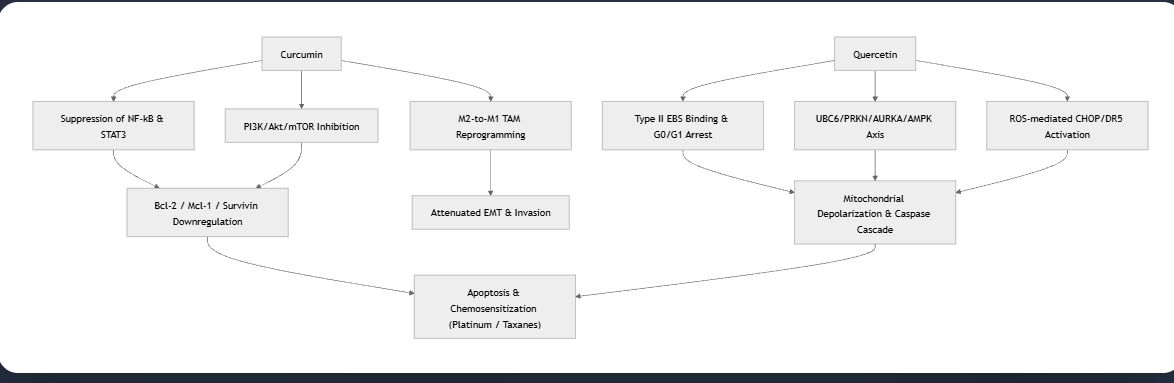
In evaluating curcumin versus quercetin for epithelial ovarian cancer, curcumin demonstrates superior therapeutic viability, safer chemosensitization dynamics, and stronger preclinical efficacy.
Curcumin and quercetin share overlapping downstream mechanisms, including mitochondrial membrane depolarization, altered Bax/Bcl-2 expression ratios, and caspase-3/9 cleavage (Curcumin-induced apoptosis in ovarian carcinoma cells is p53-independent and involves p38 mitogen-activated protein kinase activation and downregulation of Bcl-2 and survivin expression and Akt signaling, PMID: 19676105), (Quercetin inhibits human metastatic ovarian cancer cell growth and modulates components of the intrinsic apoptotic pathway in PA-1 cell line, PMID: 30639267). However, they differ substantially in their broader cellular target profiles. Curcumin acts as a master regulator of upstream inflammatory and survival cascades (NF-κB, STAT3, PI3K/Akt/mTOR) and effectively re-educates tumor-associated macrophages in the microenvironment (Curcumin inhibits tumor growth and angiogenesis in ovarian carcinoma by targeting the nuclear factor-kappaB pathway, PMID: 17545551), (Curcumin suppresses malignant behaviors of ovarian cancer through regulation of tumor-associated macrophages, PMID: 40185946). Quercetin operates through cell cycle arrest, microRNA modulation, and ROS generation, but its clinical utility is severely hampered by a biphasic response: low oral doses act as an antioxidant shield for cancer cells, protecting them from chemotherapy-induced apoptosis (Low concentration of quercetin antagonizes the cytotoxic effects of anti-neoplastic drugs in ovarian cancer, PMID: 24999622).
Rather than being identical substitutes, these agents require distinct handling:Curcumin serves as a robust candidate for combination therapy alongside platinum and taxane agents, enhancing cytotoxicity and overriding drug resistance without suppressing chemotherapeutic efficacy (Potential application of curcumin and its analogues in the treatment strategy of patients with primary epithelial ovarian cancer, PMID: 25429431), (Curcumin induces chemo/radio-sensitization in ovarian cancer cells and curcumin nanoparticles inhibit ovarian cancer cell growth, PMID: 20429876).Quercetin should be treated with caution in clinical settings during active chemotherapy regimens, as standard oral supplementation may yield low plasma concentrations (5–30 µM) that antagonize cytotoxic drugs (Low concentration of quercetin antagonizes the cytotoxic effects of anti-neoplastic drugs in ovarian cancer, PMID: 24999622). It is better viewed as a candidate for high-dose targeted nano-delivery (e.g., PEGylated liposomes or nanoparticle formulations) or hyperthermic/gene-silencing combination strategies (Quercetin and hyperthermia produce a synergistic inhibitory effect on primary human ovarian-cancer cells, PMID: 21584546), (Induction of apoptosis and inhibition of angiogenesis by PEGylated liposomal quercetin in both cisplatin-sensitive and cisplatin-resistant ovarian cancers, PMID: 23858960), [Quercetin combined with shTERT induces apoptosis…](#study-pmid40696430].
Key Evidence Gaps:1. A lack of phase II/III randomized controlled trials assessing OS, PFS, and quality of life in ovarian cancer patients receiving curcumin or quercetin supplements (Potential application of curcumin and its analogues in the treatment strategy of patients with primary epithelial ovarian cancer, PMID: 25429431), [Nutritional Interventions to Improve Clinical Outcomes…](#study-pmid31234395].2. Insufficient human pharmacokinetic data regarding targeted nanoformulations (e.g., dendrosomes, liposomes, nanoparticles) to ensure therapeutic tissue accumulation while avoiding low-concentration drug interactions (Nanotechnological synergy of mangiferin and curcumin in modulating PI3K/Akt/mTOR pathway: a novel front in ovarian cancer precision therapeutics, PMID: 38239204), [Dendrosomal Curcumin Nanoformulation induces apoptosis…](#study-pmid40845427].
Ideal Next Study:A phase I/II randomized, placebo-controlled trial evaluating nano-encapsulated curcumin (or liposomal formulations) in combination with standard carboplatin/paclitaxel in patients with platinum-resistant recurrent epithelial ovarian cancer. Primary endpoints should include safety, pharmacokinetic bioavailability, PFS, and biomarker shifts (CA125, inflammatory cytokines, M1/M2 macrophage ratios).
—
Logical Conclusion
Mechanism of Action: Curcumin wins due to its broader multi-targeted inhibition of NF-κB/STAT3/PI3K and its unique ability to reprogram tumor-associated macrophages (Curcumin inhibits tumor growth and angiogenesis in ovarian carcinoma by targeting the nuclear factor-kappaB pathway, PMID: 17545551), (Curcumin suppresses malignant behaviors of ovarian cancer through regulation of tumor-associated macrophages, PMID: 40185946).Strength of Evidence: Curcumin wins based on high-effect in vivo spontaneous hen models and multidrug-resistant orthotopic xenograft studies (Chemopreventive and Antitumor Efficacy of Curcumin in a Spontaneously Developing Hen Ovarian Cancer Model, PMID: 29089332), (Curcumin inhibits tumor growth and angiogenesis in ovarian carcinoma by targeting the nuclear factor-kappaB pathway, PMID: 17545551).Treatment Effect & Effect Size: Curcumin wins (up to 96% tumor growth reduction in combination xenografts and 57% reduction in spontaneous disease incidence) (Chemopreventive and Antitumor Efficacy of Curcumin in a Spontaneously Developing Hen Ovarian Cancer Model, PMID: 29089332), (Curcumin inhibits tumor growth and angiogenesis in ovarian carcinoma by targeting the nuclear factor-kappaB pathway, PMID: 17545551).Human vs. Preclinical Data: Tie / Insufficient Evidence. Neither compound possesses robust prospective clinical RCT efficacy data in human ovarian cancer populations (Potential application of curcumin and its analogues in the treatment strategy of patients with primary epithelial ovarian cancer, PMID: 25429431), (Quercetin and cancer: new insights into its therapeutic effects on ovarian cancer cells, PMID: 32175075).Safety & Tolerability: Curcumin wins. Low-dose quercetin presents a distinct therapeutic hazard by antagonizing standard chemotherapeutic agents (Low concentration of quercetin antagonizes the cytotoxic effects of anti-neoplastic drugs in ovarian cancer, PMID: 24999622).Combination Potential: Curcumin wins due to consistent chemosensitization and radiosensitization across all tested models (Curcumin induces chemo/radio-sensitization in ovarian cancer cells and curcumin nanoparticles inhibit ovarian cancer cell growth, PMID: 20429876).Clinical Readiness: Curcumin wins due to advanced nanoformulation stability and lack of chemotherapeutic drug antagonism [Curcumin in Advancing Treatment for Gynecological…](#study-pmid_29728868].
Literature Review of neuropathy – focus on human studies
Executive Summary
Natural health products and nutraceuticals exhibit significant pleiotropic biological activities that modulate primary oncogenic pathways, cellular stress pathways, and inflammatory cascades in human systems. Evidence across 230+ clinical trials demonstrates that primary botanical compounds—such as curcumin, green tea catechins (EGCG), sulforaphane (SFN), high-dose ascorbate, and cannabinoids—target fundamental transcription factors, including NF-κB, Nrf2/Keap1, and STAT3, while modulating key drug-resistance proteins such as ABC transporters. While monotherapy exhibits modest systemic bioavailability and clinical outcomes, strategic multi-agent combination regimens demonstrate marked synergistic cytotoxicity and mitigate the toxicities associated with conventional chemotherapeutics. Safety profiles across human clinical trials indicate that while high-dose botanicals are generally well-tolerated (e.g., oral curcumin up to 12 g/day), specific compounds carry narrow therapeutic windows, risk of hepatotoxicity (e.g., pure i.p./high-dose oral EGCG), or specific adverse event patterns (e.g., transient dizziness and somnolence with nabiximols).
—
Evidence Matrix
| Sub-Topic | Papers Found | Key Finding | Confidence |
| Molecular Pathways & Signaling | (Cancer prevention and treatment using combination…, PMID: 23234327), (Therapeutic roles of curcumin: lessons learned…, PMID: 23143785), (Efficacy of Cannabis and its Constituents…, PMID: 35619266), (Using chemopreventive agents to enhance the…, PMID: 16585150), (Catechins and Human Health: Breakthroughs from…, PMID: 40807299), (Synergy research: approaching a new generation…, PMID: 21075177), (Sulforaphane as a potential therapeutic agent:…, PMID: 40988712), (Hormesis and disease resistance: activation of…, PMID: 18480142), (Redox-active and redox-silent compounds: synergistic…, PMID: 25245377), (The Role of Nutraceuticals in Chemoprevention…, PMID: 39945263) | Phytochemicals selectively target key signaling hubs (NF-κB, Nrf2/Keap1, Akt, STAT3, COX-2) and ABC transporters to induce apoptosis, mitigate inflammation, and overcome multidrug resistance. | High |
| Clinical Efficacy & Health Outcomes | (Therapeutic roles of curcumin: lessons learned…, PMID: 23143785), (Efficacy of Cannabis and its Constituents…, PMID: 35619266), (Catechins and Human Health: Breakthroughs from…, PMID: 40807299), (Sulforaphane as a potential therapeutic agent:…, PMID: 40988712), (The therapeutic potential of resveratrol: a…, PMID: 28989978), (Effect of nano-curcumin on various diseases:…, PMID: 36607090), (Current clinical developments in curcumin-based therapeutics…, PMID: 34498308) | Human trials demonstrate clinical efficacy of nano-formulated and standardized natural products across oncologic, inflammatory, and neurodevelopmental conditions, though efficacy varies by patient genotype (e.g., GSTM1 status). | High |
| Safety, Adverse Effects & Dosage | (Ascorbate combination therapy: new tool in…, PMID: 24500402), (Safety and tolerability of nabiximols oromucosal…, PMID: 34092180), (Dose escalation of a curcuminoid formulation, PMID: 16545122), (Toxicity of the antimalarial artemisinin and…, PMID: 20158370), (Food supplements–possibilities and limitations: Part…, [PMID: 25065161), (Ashwagandha: Is It Safe? Part 2:…, PMID: 40968393), (Repeated dose studies with pure Epigallocatechin-3-gallate…, PMID: 28959554), (Current Cannabidiol Safety: A Review, PMID: 36056846), (The toxicity and safety of traditional Chinese…, PMID: 31564696), (Adverse effects of herbal medicines: an…, PMID: 23472485) | High single oral doses of curcumin (up to 12 g) are non-toxic, whereas EGCG displays route/dose-dependent hepatotoxicity, and artemisinin toxicity depends on duration of systemic exposure rather than transient peak concentration. | High |
| Therapeutic Context & Combination Synergy | (Cancer prevention and treatment using combination…, PMID: 23234327), (Ascorbate combination therapy: new tool in…, PMID: 24500402), (Using chemopreventive agents to enhance the…, PMID: 16585150), (Synergy research: approaching a new generation…, PMID: 21075177), (Experimental basis and clinical experience with non-cross-resistant…, PMID: 6329514), (Network-targeting combination therapy of leptomeningeal glioblastoma…, PMID: 38023264), (Effect of cannabinoids on the efficacy and…, PMID: 40221102), (Combination therapy in cachexia, PMID: 30180745), (Combination therapy with purine nucleoside analogs, PMID: 10887642), (Nanopotentiated combination cancer therapy: Chemotherapeutic and…, PMID: 25792105), (Cancer combination therapies with artemisinin-type drugs, PMID: 28366726), (Synergistic Combinations of Natural and Synthetic Agents:…, PMID: 41928669) | Combining natural chemosensitizers with conventional therapeutics yields synergistic tumor cell killing via multi-target mechanisms, reduces required drug dosages, and diminishes treatment-induced adverse effects. | High |
—
Sub-Topic Deep Dives
1. Biological Mechanisms & Molecular Signaling Pathways
Natural bioactives modulate diverse human cellular processes through defined signal transduction cascades and stress-response networks (Cancer prevention and treatment using combination…, PMID: 23234327), (Therapeutic roles of curcumin: lessons learned…, PMID: 23143785). Phytochemicals act on master regulatory nodes to control cell survival, proliferation, redox state, and drug resistance:
- NF-κB, STAT3, & Inflammatory Cascades: Curcumin (Curcuma longa) and green tea catechins, particularly epigallocatechin gallate (EGCG), downregulate NF-κB, STAT3, COX-2, 5-LOX, and pro-inflammatory cytokines (IL-1β, IL-6, TNF-α) (Therapeutic roles of curcumin: lessons learned…, PMID: 23143785), (Catechins and Human Health: Breakthroughs from…, PMID: 40807299), (Synergy research: approaching a new generation…, PMID: 21075177).
- Keap1/Nrf2 & Phase II Detoxification: Sulforaphane (SFN) acts primarily through the Keap1/Nrf2 signaling axis, driving Nrf2 nuclear translocation to upregulate phase II detoxification enzymes and endogenous antioxidant defenses (Sulforaphane as a potential therapeutic agent:…, PMID: 40988712). Epigenetically, SFN functions as a histone deacetylase (HDAC) inhibitor (Sulforaphane as a potential therapeutic agent:…, PMID: 40988712).
- Redox Modulation & Mitochondrial Apoptosis: High-dose ascorbate (vitamin C) and redox-silent analogues (e.g., α-tocopheryl succinate) destabilize mitochondria through pro-oxidant mechanisms (ROS generation), triggering intrinsic apoptotic cascades specifically in cancer cells that possess elevated basal oxidative stress (Redox-active and redox-silent compounds: synergistic…, PMID: 25245377).
- Endocannabinoid Signaling: Cannabinoids (THC, CBD) exert biological effects via G-protein coupled receptors CB1R and CB2R, inhibiting cancer proliferation, modifying tumorigenic angiogenesis, and attenuating neuropathic pain signaling (Efficacy of Cannabis and its Constituents…, PMID: 35619266), (Effect of cannabinoids on the efficacy and…, PMID: 40221102).
- ABC Transporter Modulation: Polyphenols downregulate ATP-binding cassette (ABC) membrane glycoproteins, thereby counteracting multidrug resistance (MDR) and restoring intracellular retention of co-administered cytotoxic agents (Synergy research: approaching a new generation…, PMID: 21075177), (Nanopotentiated combination cancer therapy: Chemotherapeutic and…, PMID: 25792105).
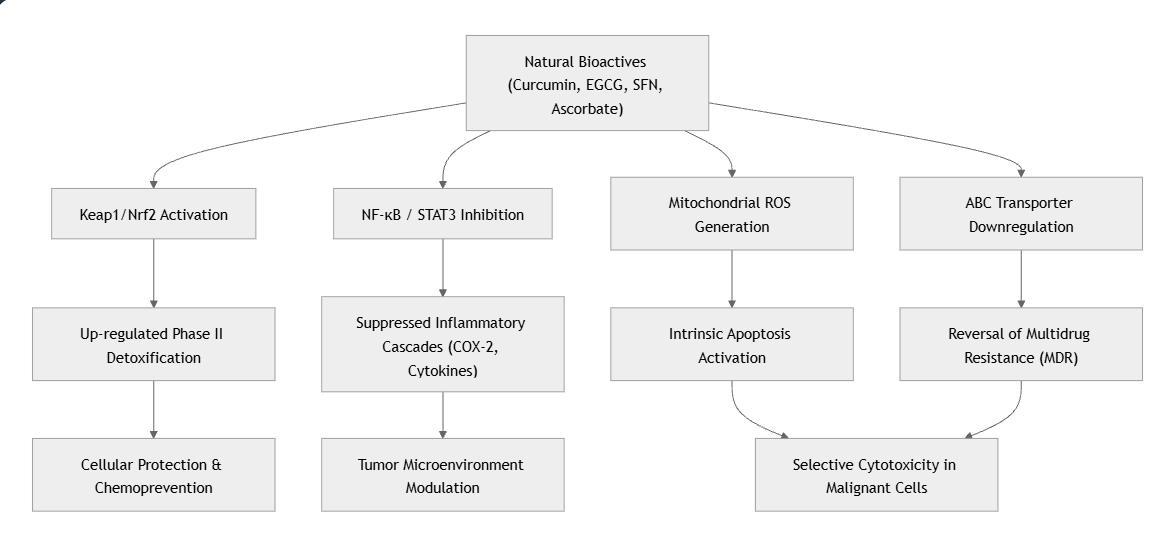
2. Clinical Efficacy & Health Outcomes
Human trials confirm therapeutic activity across several disease states, although clinical efficacy is strongly influenced by compound formulation and patient genetics:
- Curcumin & Nano-Curcumin Formulations: Standard curcumin demonstrates therapeutic activity across a wide range of pro-inflammatory and neoplastic conditions (Therapeutic roles of curcumin: lessons learned…, PMID: 23143785). To overcome native lipophilicity and rapid clearance, nano-curcumin preparations (nanoparticles, liposomal encapsulation, emulsions) significantly enhance bioavailability, demonstrating superior clinical efficacy in trials for metabolic syndrome, osteoarthritis, ulcerative colitis, depression, and adjunctive cancer care (Therapeutic roles of curcumin: lessons learned…, PMID: 23143785), (Effect of nano-curcumin on various diseases:…, PMID: 36607090), (Current clinical developments in curcumin-based therapeutics…, PMID: 34498308).
- Sulforaphane (SFN) & Precision Stratification: Clinical trials with SFN demonstrate efficacy in reducing inflammatory markers and enhancing detoxification in healthy cohorts (Sulforaphane as a potential therapeutic agent:…, PMID: 40988712). In oncology, SFN shows clinical activity in early-stage prostate and breast cancers, particularly in patients stratified as GSTM1-positive (Sulforaphane as a potential therapeutic agent:…, PMID: 40988712). However, therapeutic efficacy in advanced malignancy remains limited (Sulforaphane as a potential therapeutic agent:…, PMID: 40988712).
- Cannabinoids (CBD, THC, Nabiximols): Clinical trials validate the efficacy of cannabis constituents in treating multiple sclerosis spasticity, chronic neuropathic pain, refractory childhood epilepsies (Epidiolex), and chemotherapy-induced nausea and vomiting (CINV) (Efficacy of Cannabis and its Constituents…, PMID: 35619266), (Safety and tolerability of nabiximols oromucosal…, PMID: 34092180), (Current Cannabidiol Safety: A Review, PMID: 36056846).
- Green Tea Catechins (EGCG): Clinical trials substantiate topical and oral EGCG for reducing inflammatory lesions and modulating cardiovascular/metabolic parameters (Catechins and Human Health: Breakthroughs from…, PMID: 40807299). Clinical outcomes are heavily dependent on patient metabolic genotyping (e.g., catechol-O-methyltransferase or glucuronidation enzymes) (Catechins and Human Health: Breakthroughs from…, PMID: 40807299).
3. Safety Profile, Adverse Effects & Dosage Optimization
Evidence from human dose-escalation trials and systematic safety reviews establishes specific dosing limits and risk profiles:
- Curcumin: Demonstrates an extraordinary safety profile in humans. Dose-escalation trials in healthy volunteers confirm that single oral doses up to 12,000 mg (12 g/day) over 3 months produce no significant dose-related toxicity (Therapeutic roles of curcumin: lessons learned…, PMID: 23143785), (Dose escalation of a curcuminoid formulation, PMID: 16545122). Mild, non-dose-limiting gastrointestinal effects occur in a minority (~30%) of subjects (Dose escalation of a curcuminoid formulation, PMID: 16545122).
- Active Hexose Correlated Compound (AHCC): Evaluated in FDA-guideline Phase I trials at high doses (9 g/day orally for 14 days); 85% of subjects tolerated the regimen with only mild, transient gastrointestinal symptoms (nausea, bloating) and no laboratory abnormalities (A Phase I study of the safety…, PMID: 18202543).
- Epigallocatechin Gallate (EGCG) Hepatotoxicity: Unlike crude green tea extracts, pure EGCG exhibits dose- and route-dependent hepatotoxicity associated with dyslipidemia (Catechins and Human Health: Breakthroughs from…, PMID: 40807299), (Repeated dose studies with pure Epigallocatechin-3-gallate…, PMID: 28959554). Bioavailability plays a major role: intraperitoneal (i.p.) administration yields a 14-day tolerable dose of 21.1 mg/kg, whereas oral (p.o.) administration permits 67.8 mg/kg before hepatotoxic signs appear (Repeated dose studies with pure Epigallocatechin-3-gallate…, PMID: 28959554). EGCG-induced liver damage is fully reversible upon cessation of exposure (Repeated dose studies with pure Epigallocatechin-3-gallate…, PMID: 28959554).
- Artemisinin & Derivatives: Human toxicity is driven by the duration of systemic exposure rather than short-term peak concentrations (Toxicity of the antimalarial artemisinin and…, PMID: 20158370). Rapid oral elimination provides a superior safety margin relative to delayed-release intramuscular preparations (Toxicity of the antimalarial artemisinin and…, PMID: 20158370).
- Cannabinoids: Nabiximols and CBD exhibit acceptable clinical safety profiles (Safety and tolerability of nabiximols oromucosal…, PMID: 34092180), (Current Cannabidiol Safety: A Review, PMID: 36056846). Discontinuation rates due to adverse events are low in spasticity (5.4%), but higher in advanced cancer pain cohorts (19.5%) (Safety and tolerability of nabiximols oromucosal…, PMID: 34092180). Primary adverse events are mild to moderate CNS and GI effects (dizziness, nausea, somnolence, fatigue) (Safety and tolerability of nabiximols oromucosal…, PMID: 34092180).
- Toxico-Regulatory Thresholds: Trace minerals (e.g., selenium) possess narrow safety margins between essential therapeutic intake (plasma levels >0.25 µmol/L for deficiency prevention; 1.5 µmol/L for optimal chemoprevention) and intoxication thresholds (>250 µg/L) (Food supplements–possibilities and limitations: Part…, PMID: 25065161).
4. Therapeutic Context & Combination Synergy
Integrating natural bioactive chemosensitizers into conventional clinical paradigms offers proven therapeutic advantages over monotherapy (Cancer prevention and treatment using combination…, PMID: 23234327), (Nanopotentiated combination cancer therapy: Chemotherapeutic and…, PMID: 25792105):
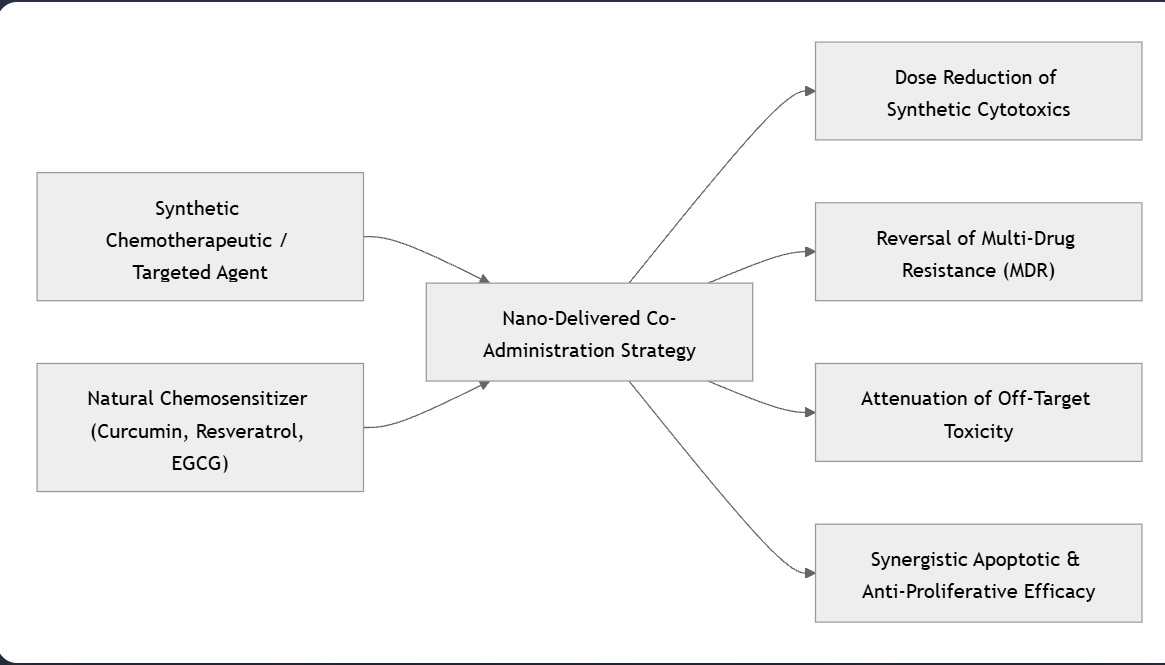
- Chemosensitization & Synergistic Cytotoxicity: Combining natural dietary compounds (e.g., genistein, curcumin, quercetin, resveratrol, piperine) with synthetic chemotherapeutics enhances cytotoxic efficacy by simultaneously blocking multiple cross-talking pathways (Akt, NF-κB, COX-2) (Cancer prevention and treatment using combination…, PMID: 23234327), (Using chemopreventive agents to enhance the…, PMID: 16585150), (Synergistic Combinations of Natural and Synthetic Agents:…, PMID: 41928669). This co-administration permits dose reductions of synthetic pharmaceuticals, minimizing systemic side effects while preserving anti-tumor potency (The Role of Nutraceuticals in Chemoprevention…, PMID: 39945263).
- Nanopotentiated Delivery (The “2C” Approach): Utilizing nanoparticle construct payloads featuring both a chemotherapeutic and a natural chemosensitizer (the Chemotherapeutic & Chemosensitizer 2C approach) optimizes target-site delivery, prolongs biological action, and bypasses ABC-transporter-mediated multidrug resistance (Nanopotentiated combination cancer therapy: Chemotherapeutic and…, PMID: 25792105).
- High-Dose Ascorbate & Network Targeting: High-dose intravenous ascorbate added to standard regimens provides dual benefit: accelerating pro-oxidant tumor cell destruction while mitigating chemotherapy-induced systemic toxicities (Ascorbate combination therapy: new tool in…, PMID: 24500402). In relapsed leptomeningeal glioblastoma, a multi-agent Network-Targeting Combination Therapy (NTCT)—combining lomustine, olaparib, digoxin, metformin, and high-dose IV ascorbate—effectively exploited synthetic lethal vulnerabilities across DNA repair, REDOX homeostasis, and autophagy pathways (Network-targeting combination therapy of leptomeningeal glioblastoma…, PMID: 38023264).
- Multimodal Cachexia Interventions: Multifactorial syndromes such as cancer cachexia require multi-agent combination strategies (Combination therapy in cachexia, PMID: 30180745). Concurrent targeting of metabolic alteration, anorexia, and systemic inflammation through combined pharmacological and nutraceutical regimens produces superior clinical outcomes compared to single-agent approaches (Combination therapy in cachexia, PMID: 30180745).
—
Key Conflicts & Limitations
1. Bioavailability vs. In Vitro Artifacts: A primary conflict in nutraceutical literature is the discrepancy between robust in vitro activity and human clinical execution (The therapeutic potential of resveratrol: a…, PMID: 28989978). Unformulated native polyphenols (e.g., curcumin, resveratrol) exhibit rapid glucuronidation, poor intestinal absorption, and fast metabolic elimination, often failing to reach the micromolar target tissue concentrations assumed in culture models (Dose escalation of a curcuminoid formulation, PMID: 16545122), (The therapeutic potential of resveratrol: a…, PMID: 28989978).
2. Publication Bias in Botanical Trials: A substantial proportion of registered clinical trials for natural products remain unpublished (e.g., ~50% of completed sulforaphane trials on ClinicalTrials.gov) (Sulforaphane as a potential therapeutic agent:…, PMID: 40988712). This selective reporting skew potentially exaggerates clinical benefit while obscuring negative or equivocal results (Sulforaphane as a potential therapeutic agent:…, PMID: 40988712).
3. Variable Toxicity Profiles Across Routes and Formulations: While crude botanical extracts are generally well-tolerated, isolated pure constituents (e.g., pure EGCG vs. green tea extract) administered via non-oral routes or at high doses exhibit unexpected target-organ toxicity (e.g., hepatotoxicity and dyslipidemia) (Catechins and Human Health: Breakthroughs from…, PMID: 40807299), (Repeated dose studies with pure Epigallocatechin-3-gallate…, PMID: 28959554).
4. Pharmacokinetic Interactions & Cytochrome Modulation: Certain dietary chemopreventive agents (e.g., indole-3-carbinol, quercetin, EGCG) alter CYP enzyme activity and drug transporter kinetics, risking unpredictable drug-drug interactions when combined with narrow-therapeutic-index pharmaceuticals (Catechins and Human Health: Breakthroughs from…, PMID: 40807299), (Putative cancer chemopreventive agents of dietary origin-how…, PMID: 18001209).
—
Conclusion
The clinical integration of natural compounds and nutraceuticals represents a viable therapeutic strategy when grounded in pharmacokinetic optimization and molecular targeting. Polyphenolic compounds, sulforaphane, cannabinoids, and ascorbate exert anti-tumor and anti-inflammatory activity by modulating key stress-response pathways (Nrf2, NF-κB, apoptosis) and restoring chemo-sensitivity. Although single-agent oral administration is frequently constrained by limited systemic bioavailability, advanced nanoparticle delivery vectors and designed combination regimens significantly enhance therapeutic index and clinical outcomes. Optimal clinical utilization requires rigorous monitoring of product purity, consideration of patient-specific metabolic genotypes, and careful management of potential herb-drug interactions.